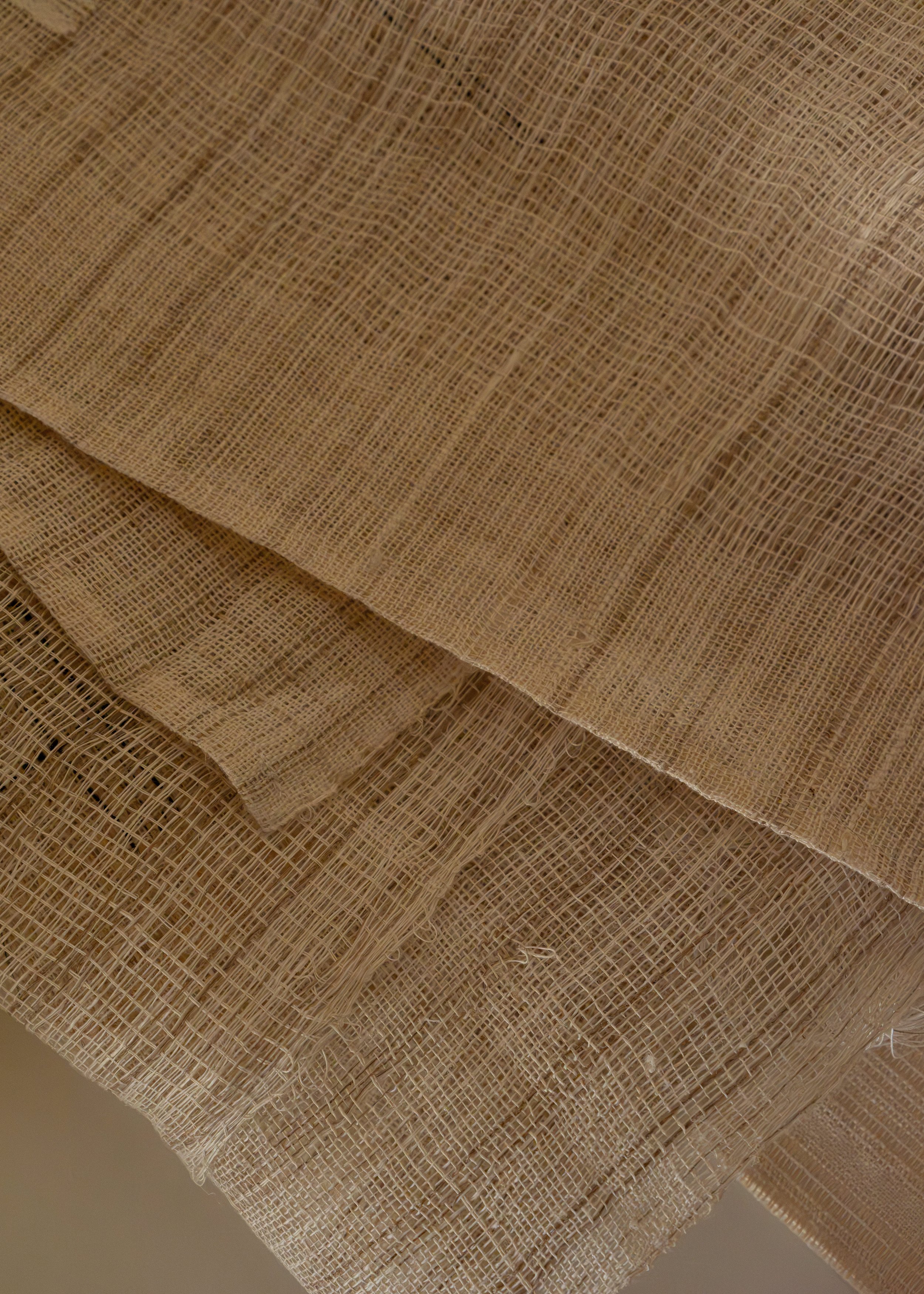
PIECES ARE INFORMED BY THE PRIMITIVE SOURCES BEHIND EARLY MODERNISM, THE ONE THAT TOOK ITS PURITY OF LINES FROM FOLK ARTS, A HIDDEN FACT ILLUSTRATED BY THE BEAUTIFUL COLLECTION OF FOLK AND ANTIQUE RUGS AND TEXTILES PRESENT IN THE COLLECTIONS OF MASTERS AND ARTISTS AT THE BAUHAUS IN ITS EARLY YEARS.

IRIS DROUET
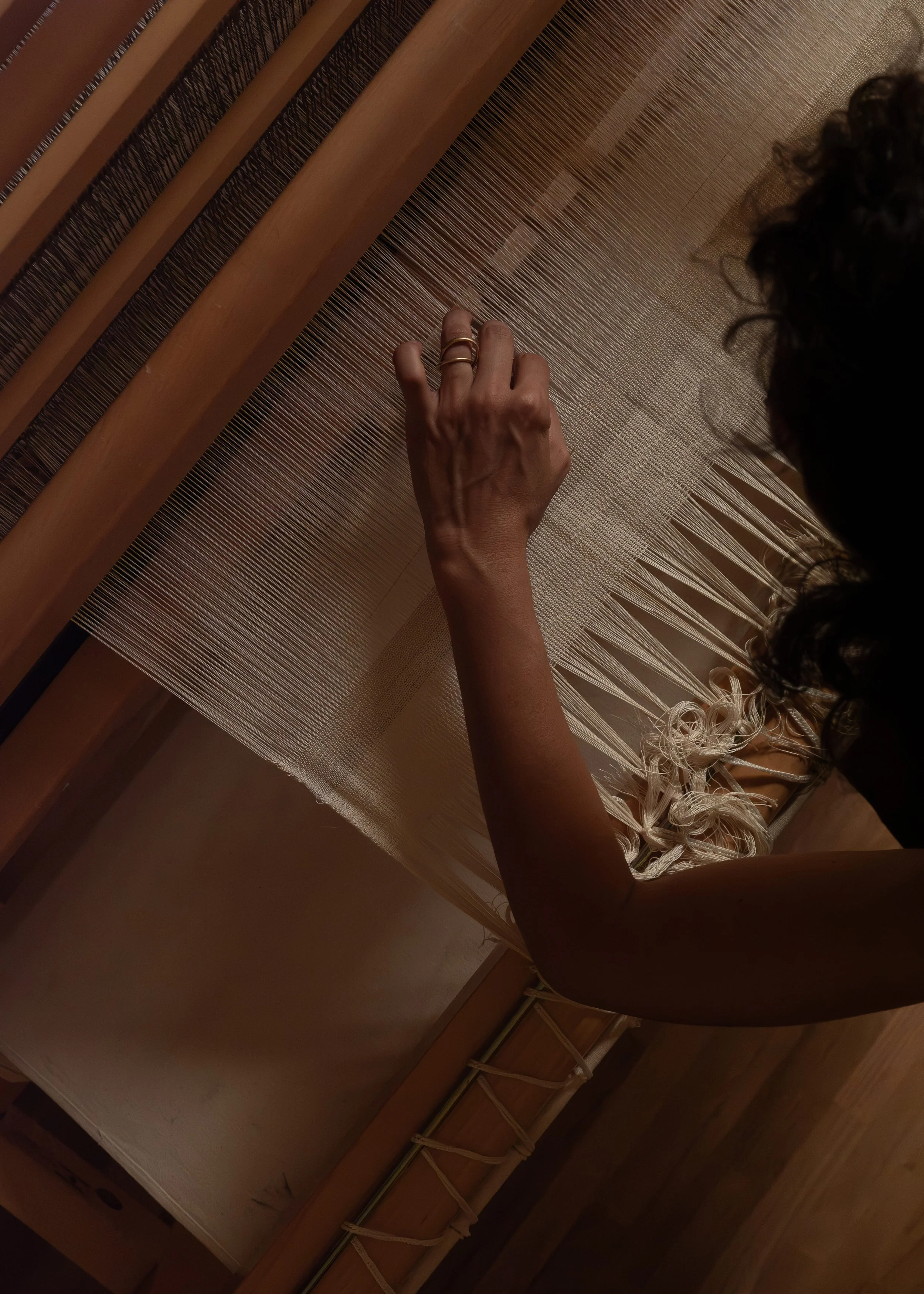
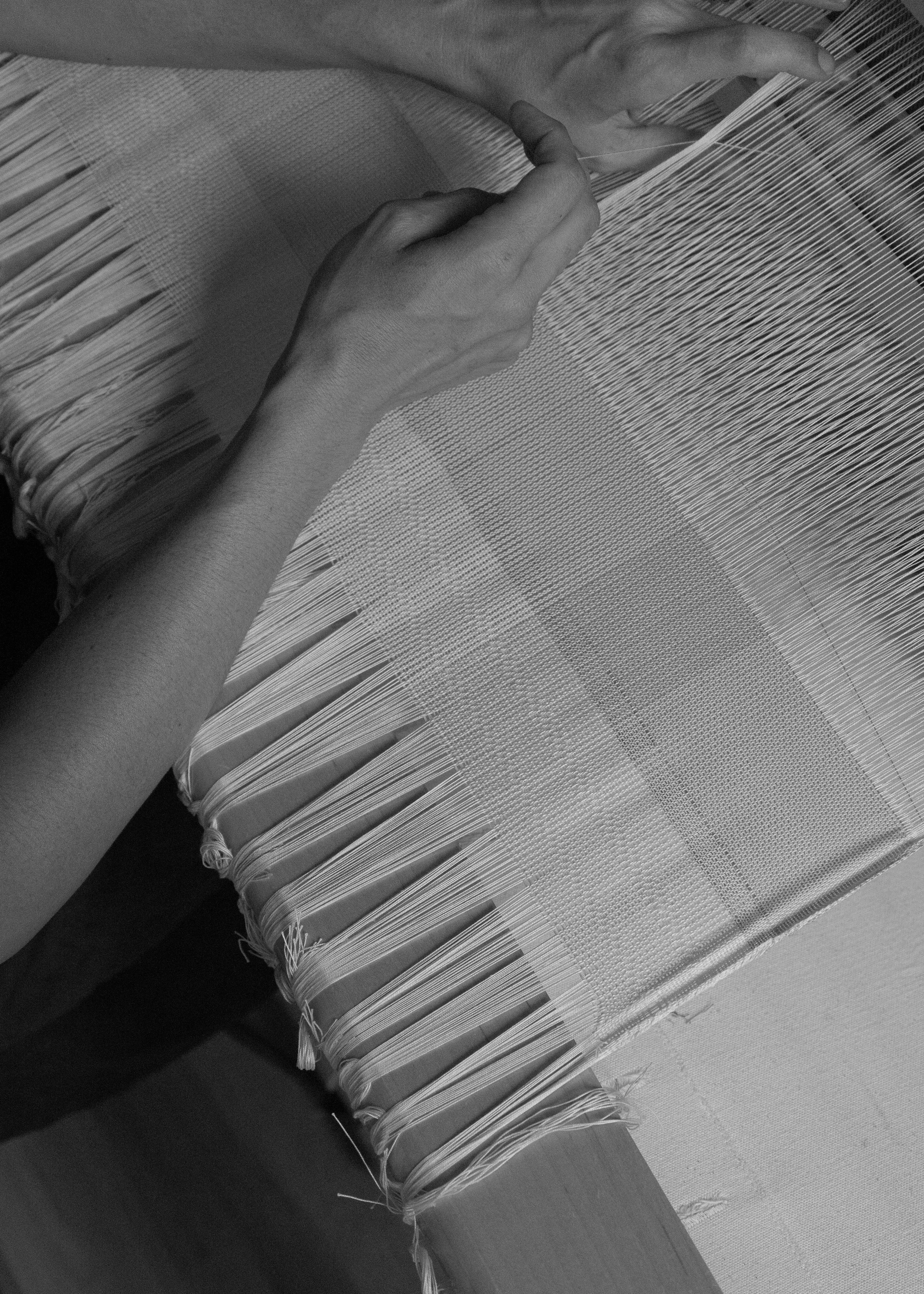
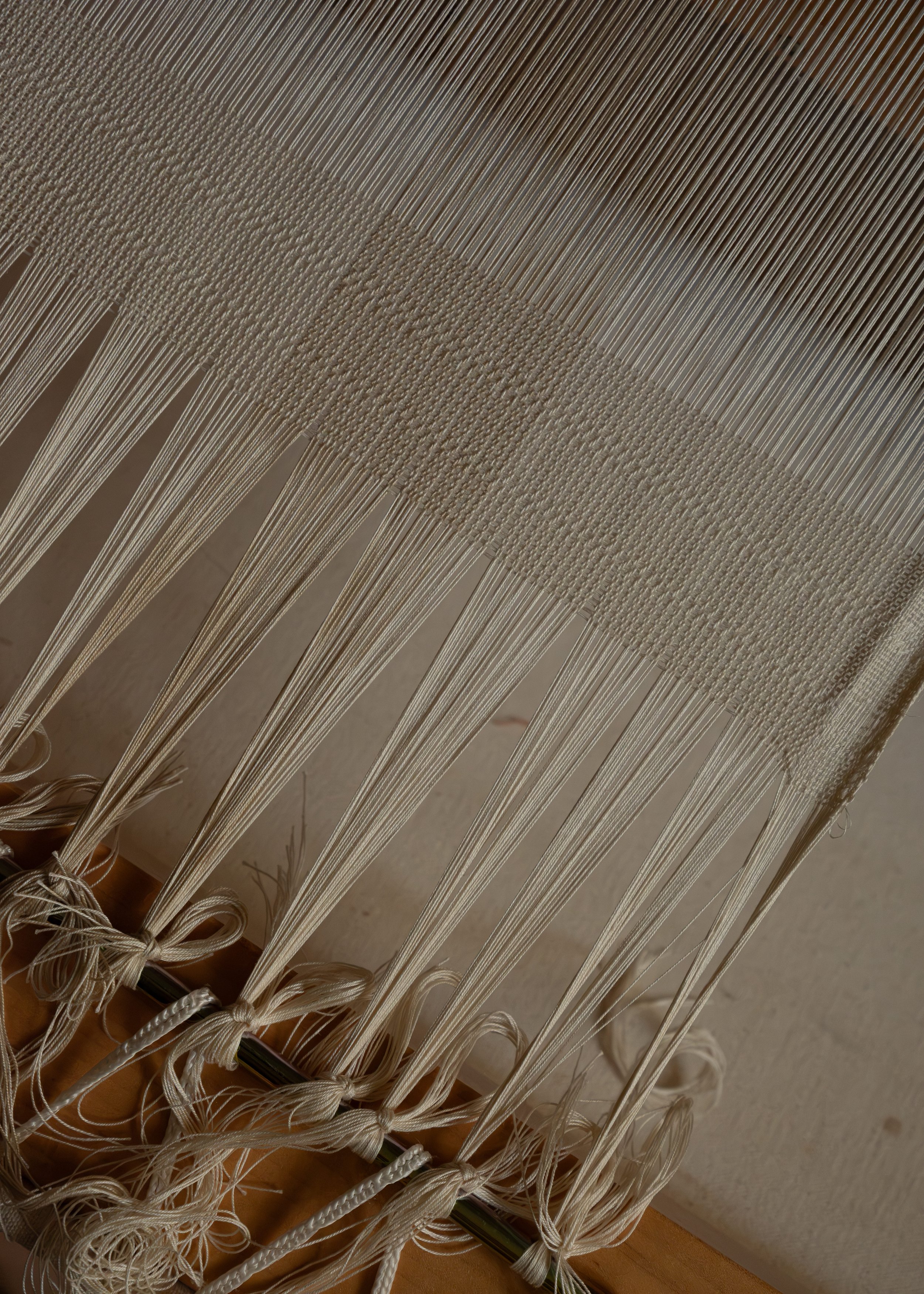
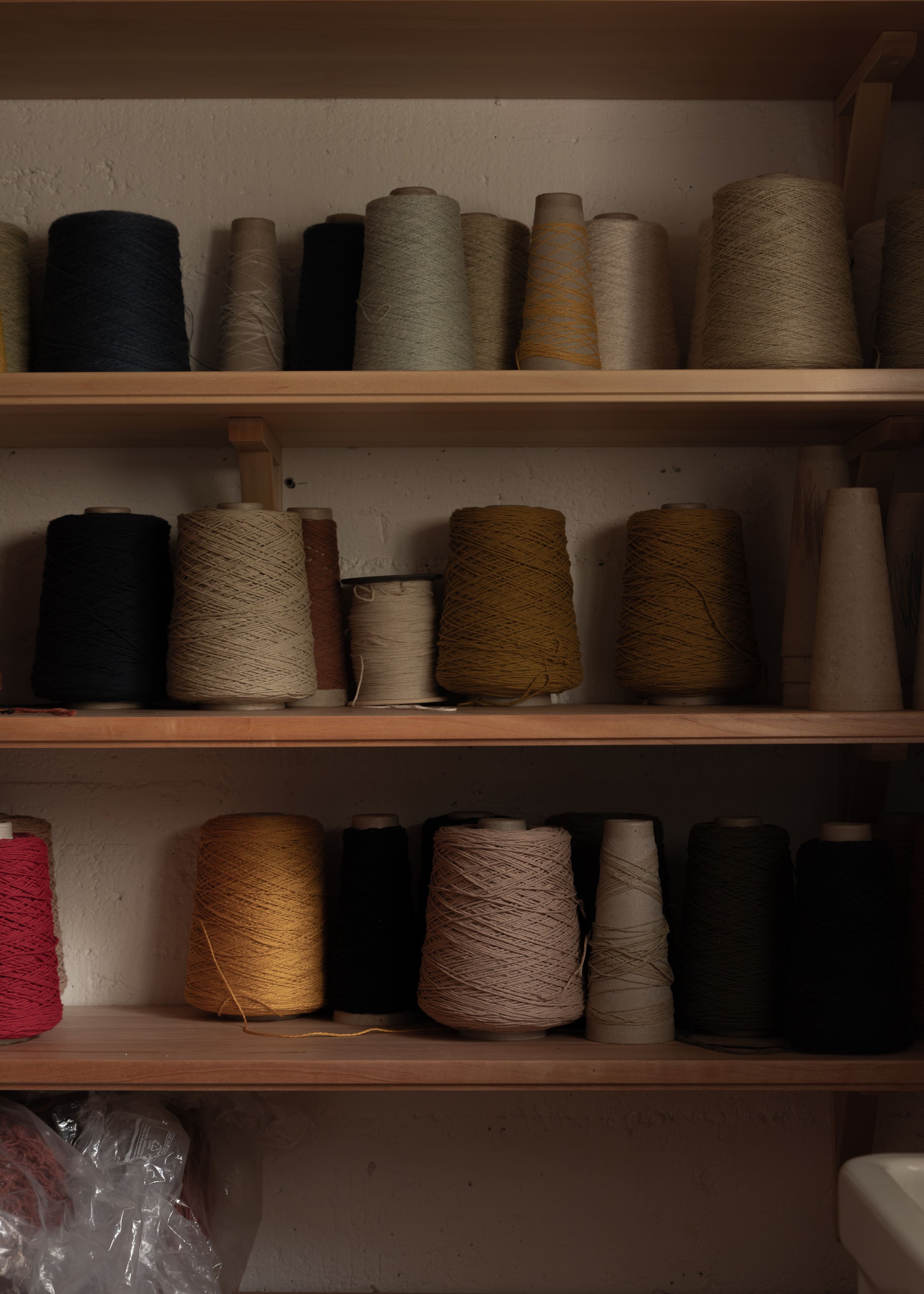
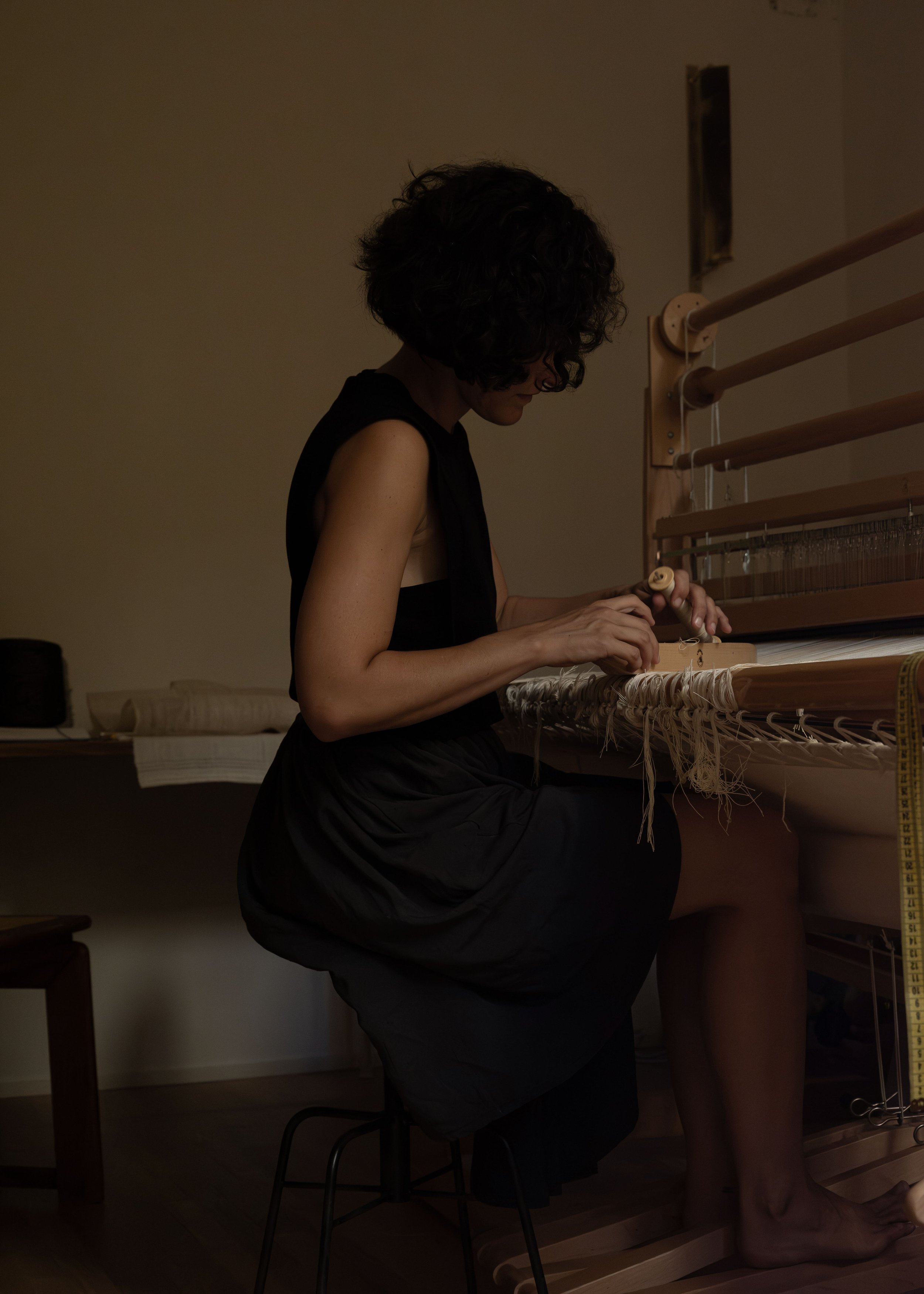
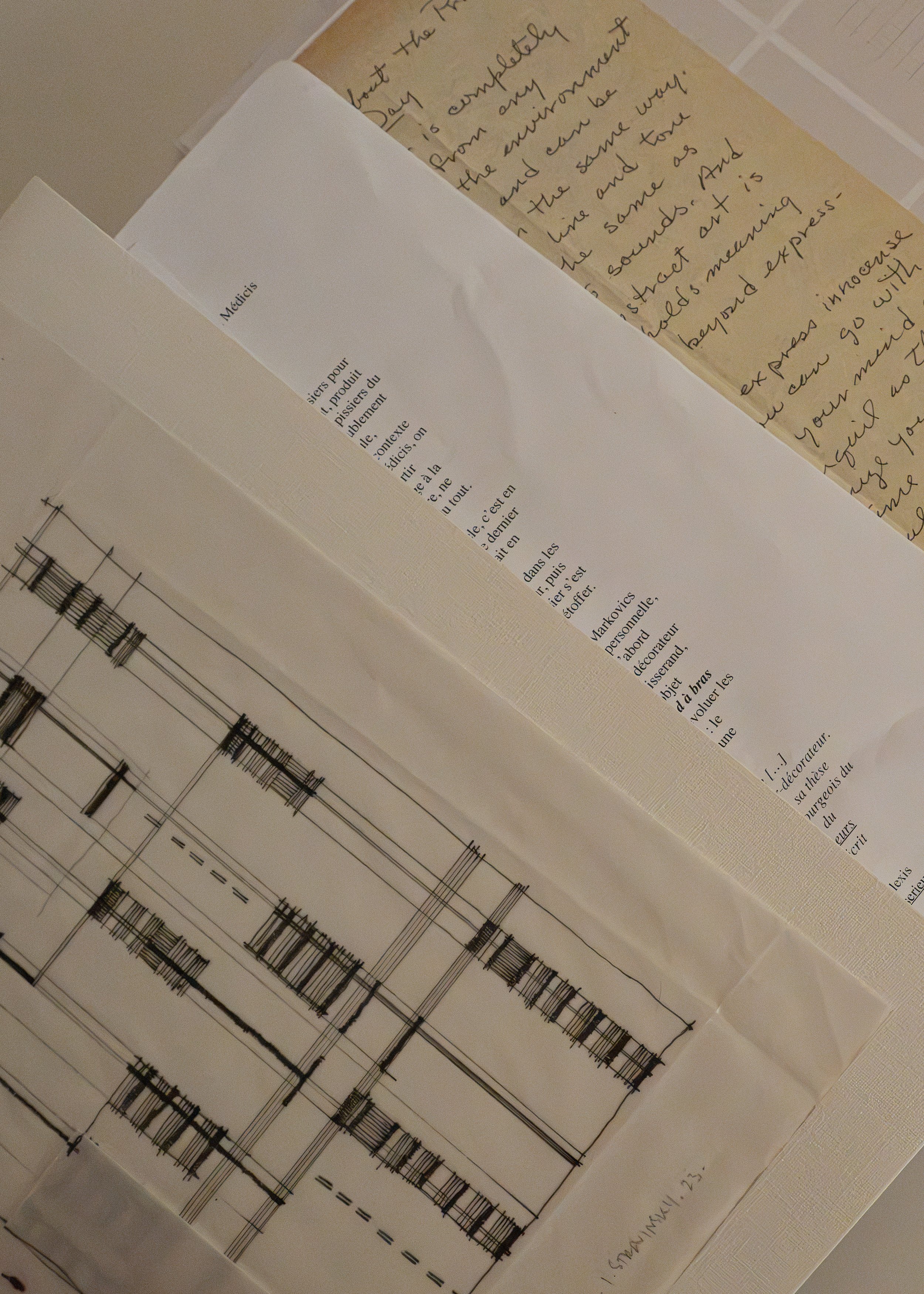
Iris Drouet (Paris, 1990) is a textile artist working on the suffused bond between the archaic and abstraction. As art historian Lara Conte notes, Drouet’s research initiates with the archives of artists associated with the Bauhaus and extends to the reductionist painting movements of the 1960s, drawing inspiration from figures such as Agnes Martin and Mira Schendel. This process of documentation enables the artist to translate, rewrite, and transcribe various media—including text, photography, musical scores and architecture—into solid textile objects rooted in the raw materials she employs in her tapestries. In her compositions, linen, ramie, and antique fabric scraps contrast with plastics, lurex, raffia, and unusual objects; these elements draw the eye to the raw material and technique, creating a tension with the abstract, linear composition of her drawings.
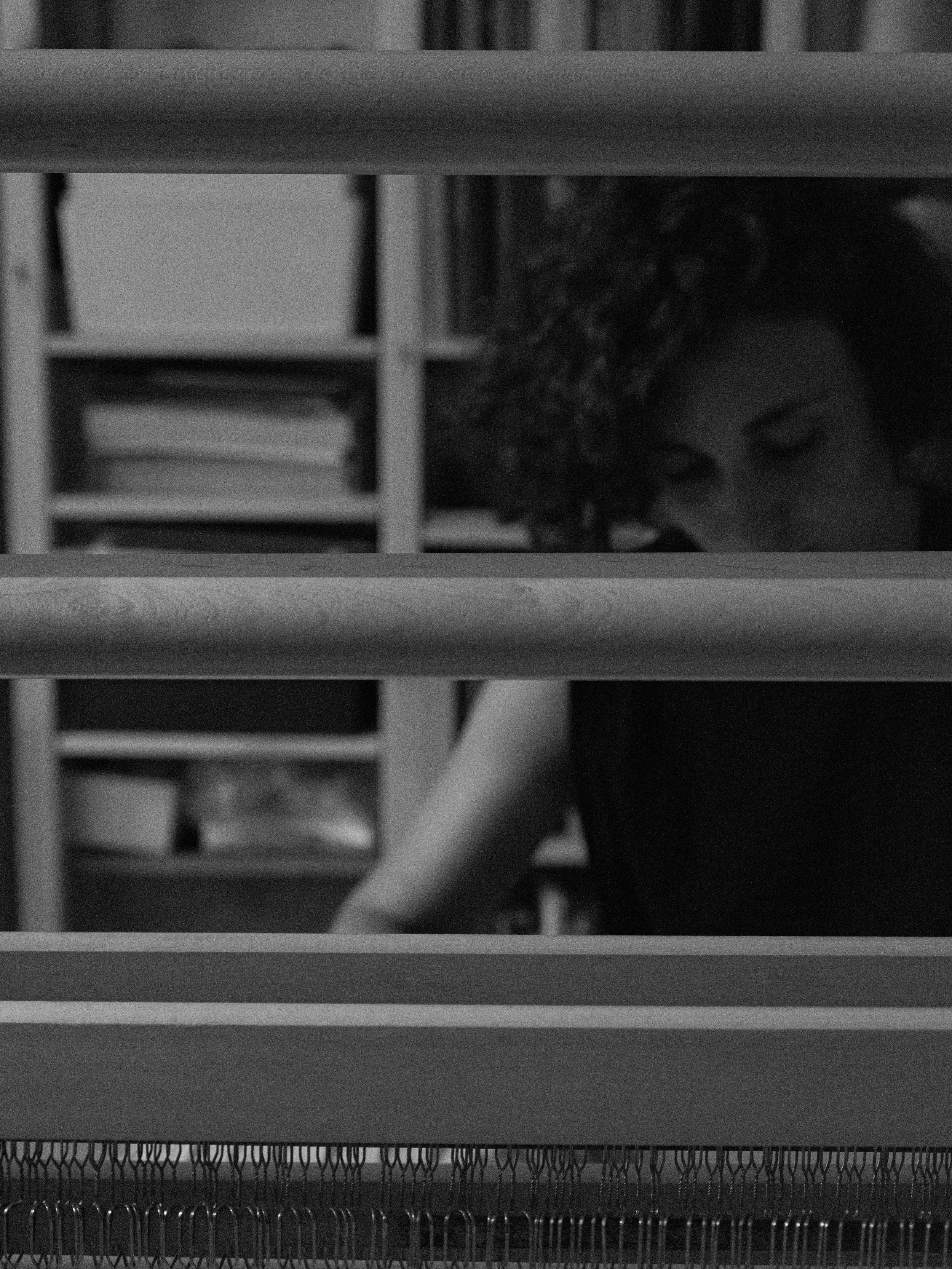
Iris lives and works in Italy. Her practice is grounded in improvisation at the loom—which becomes an active working tool—where areas of resistance and the release of tension manifest in works that explore themes of the unconscious, the archive, and the archaic as expressions of inverted power.
Versi Linien studio is the workshop-based aspect of her practice, where she explores materials and compositions to create functional pieces for architecture and design.