 Image 1 of 3
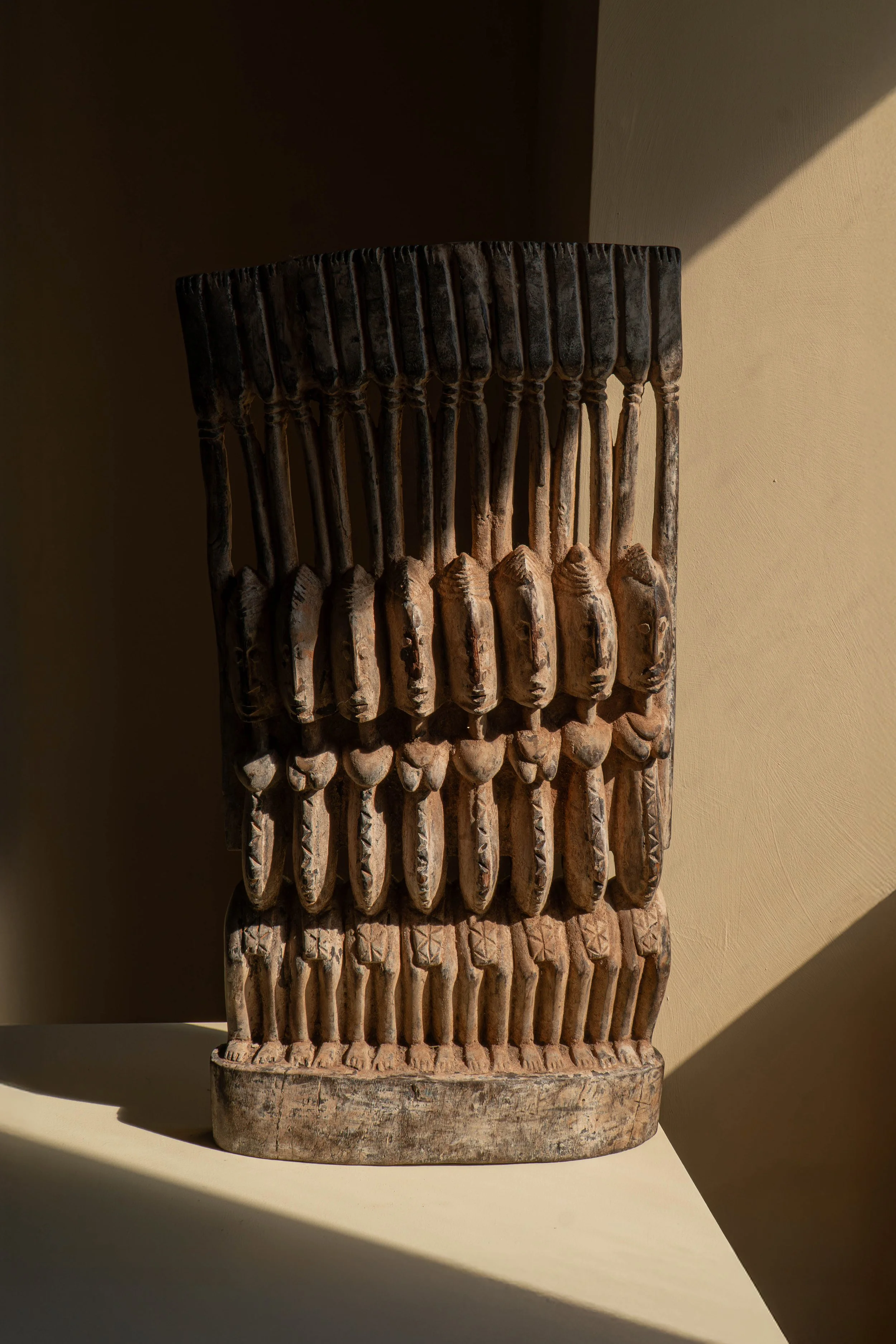 Image 2 of 3
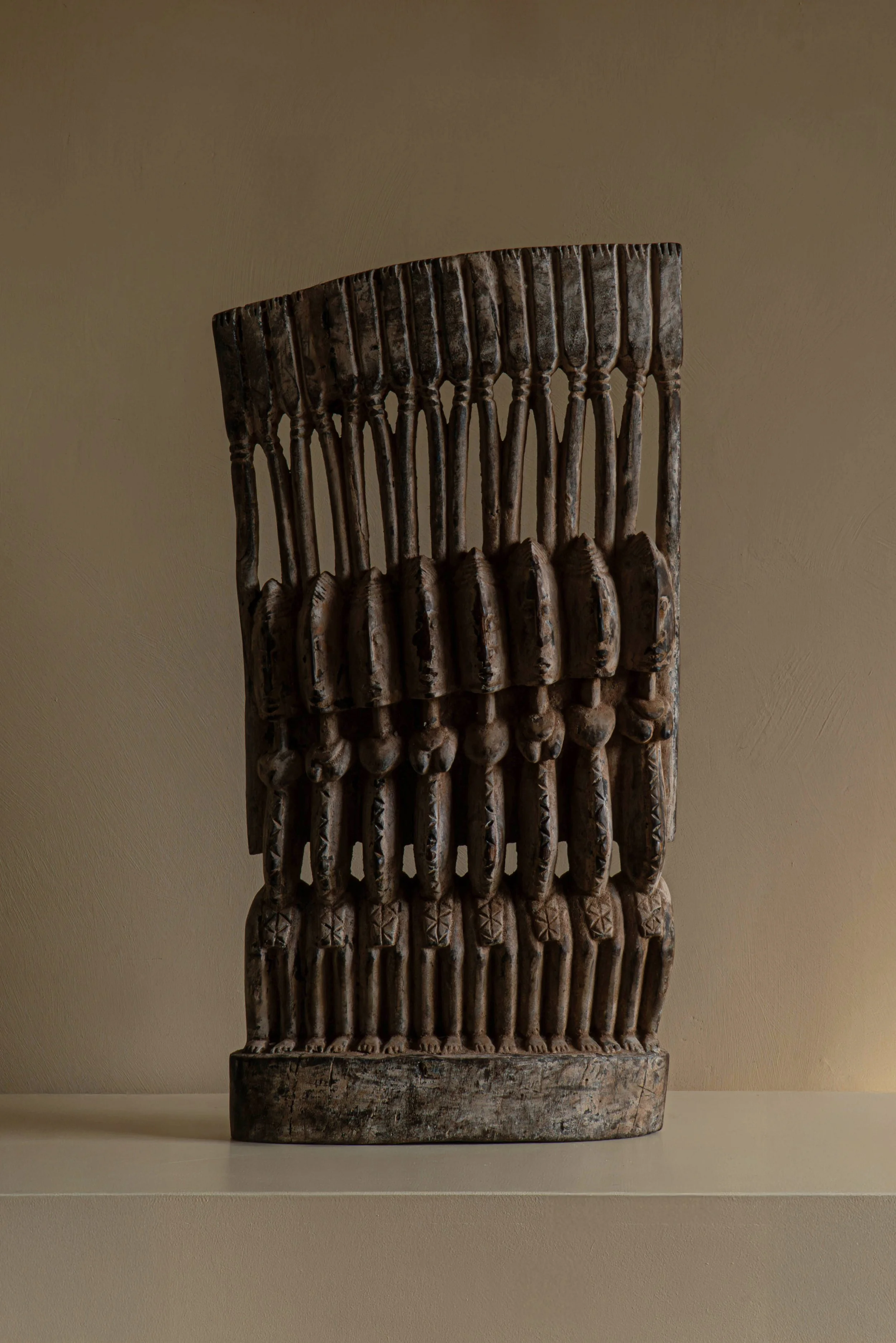 Image 3 of 3
[CURATED ANTIQUES]
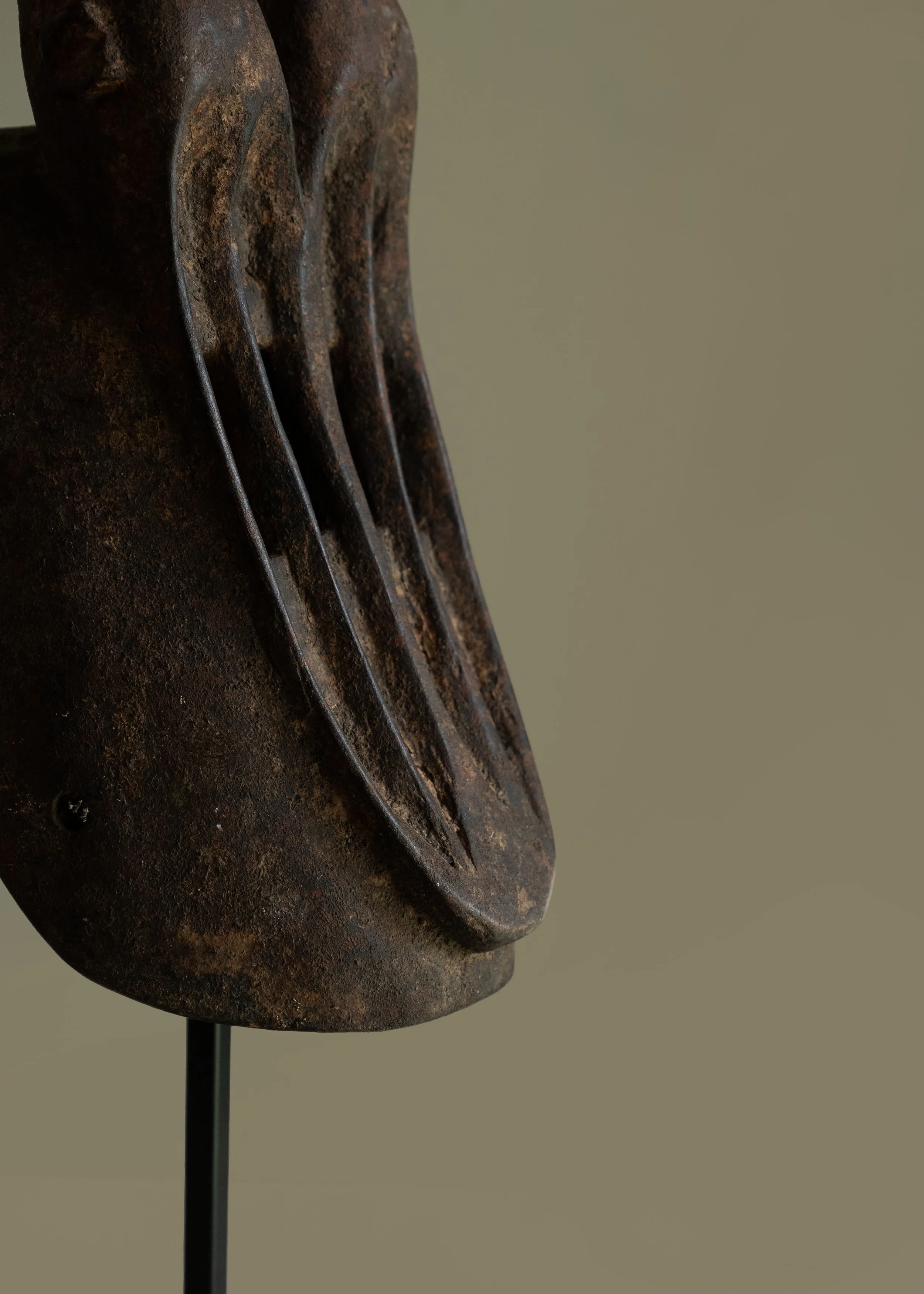
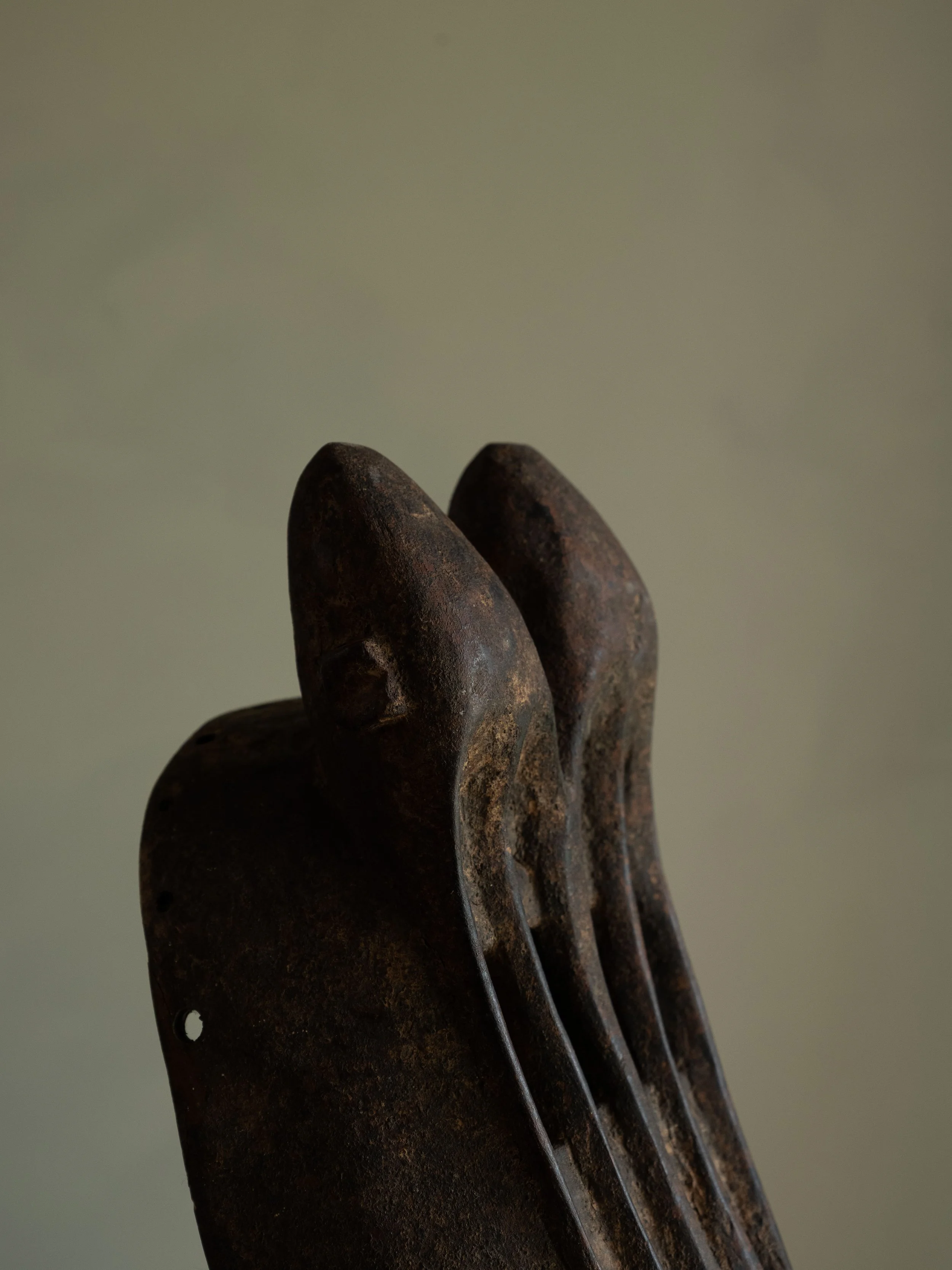
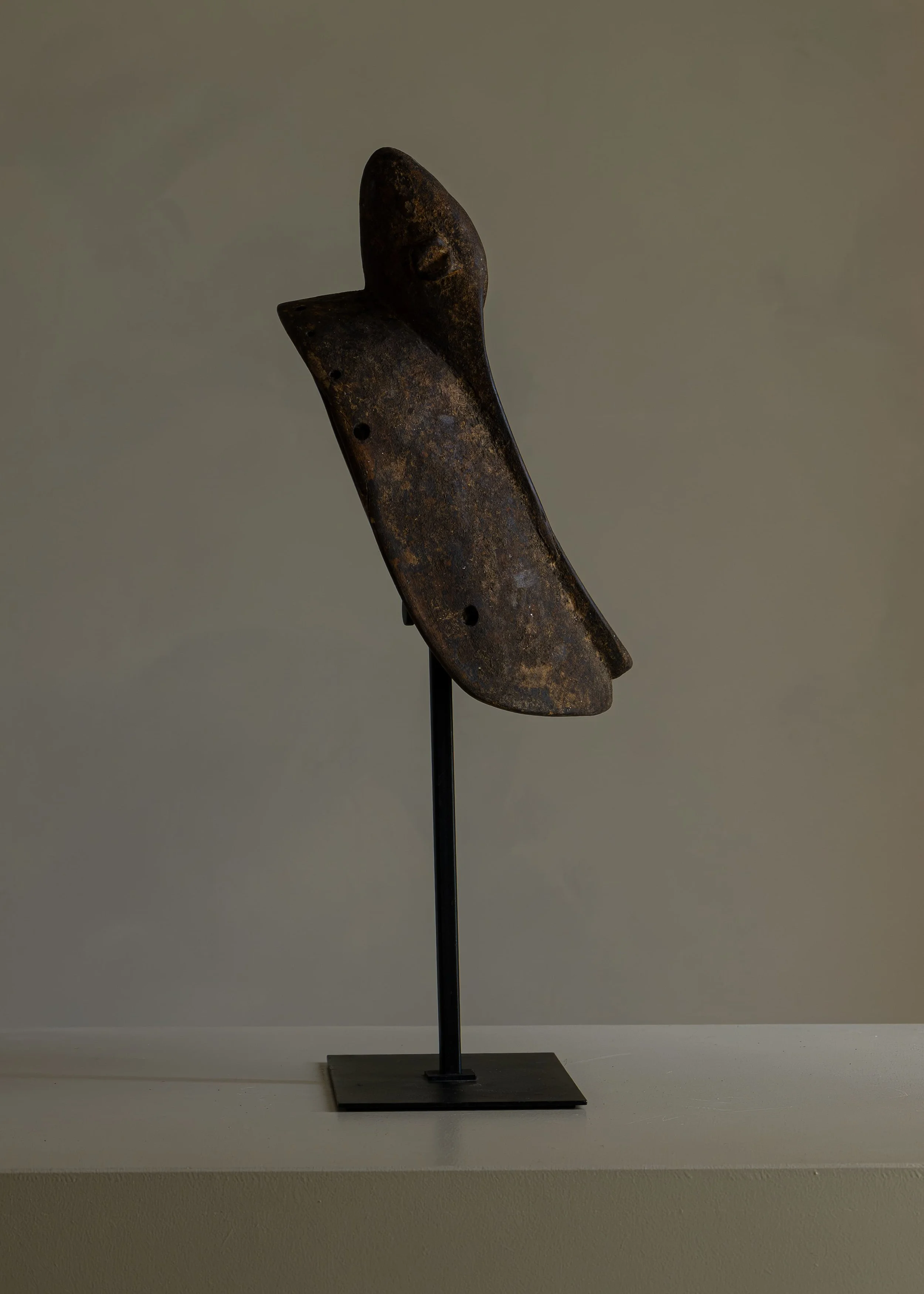
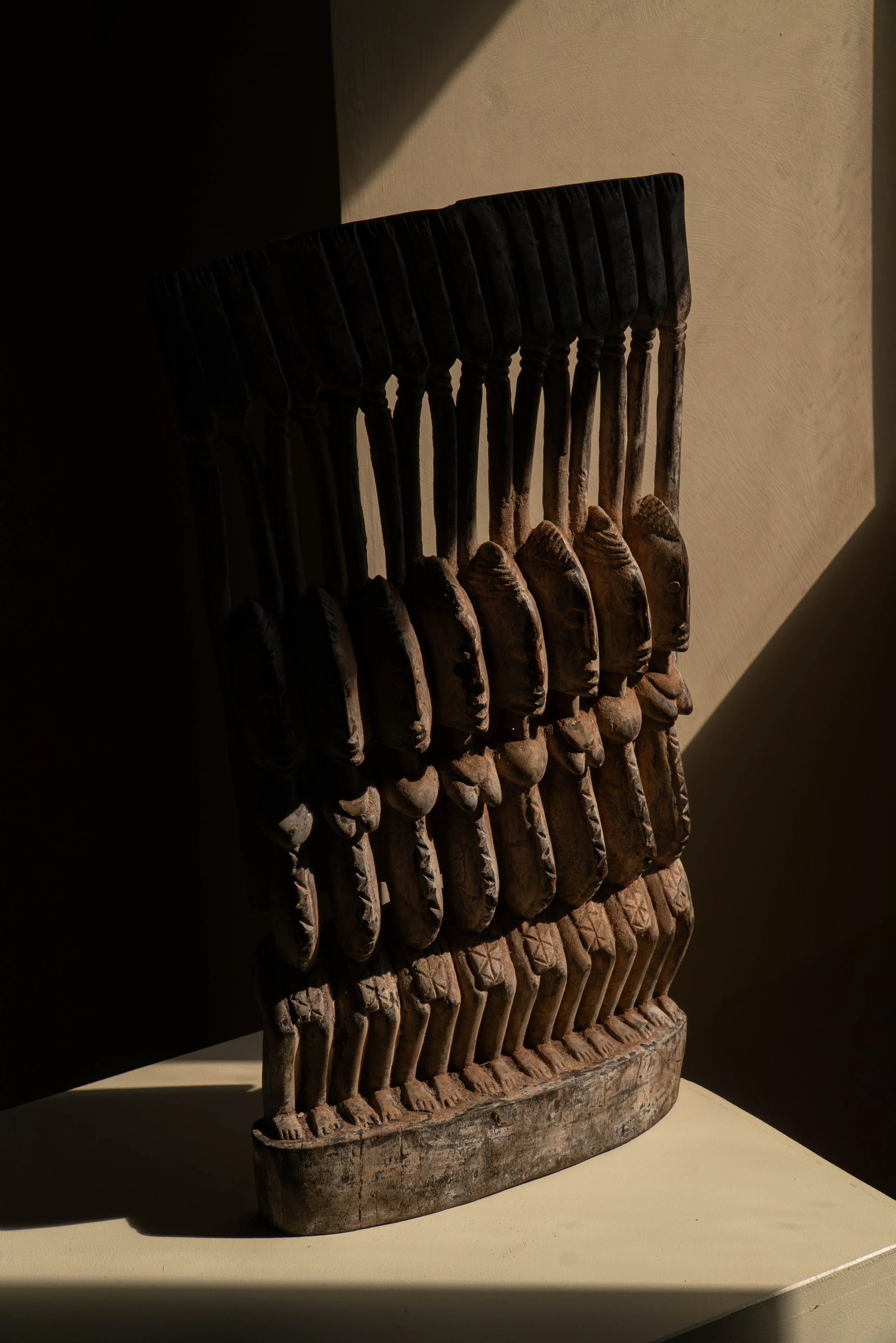
Rising from an oval base, this monumental carving assembles row upon row of human figures, their arms lifted skyward in a single, unified gesture of supplication. The composition moves upward through stacked registers — feet, scarified torsos, faces, arms — culminating in an openwork crest that seems to dissolve into the air above.
The raised-arm posture is among the most charged gestures in Dogon statuary. Scholars, including the Centre Pompidou, have long interpreted it as an act of imploring the divine — most specifically a call for rain, a matter of existential urgency for a farming people wresting crops from the arid soils of the Bandiagara Escarpment. The collective dimension here is striking: rather than a single supplicant, an entire community reaches upward together, their bodies merging into a single vertical force directed at the sky.
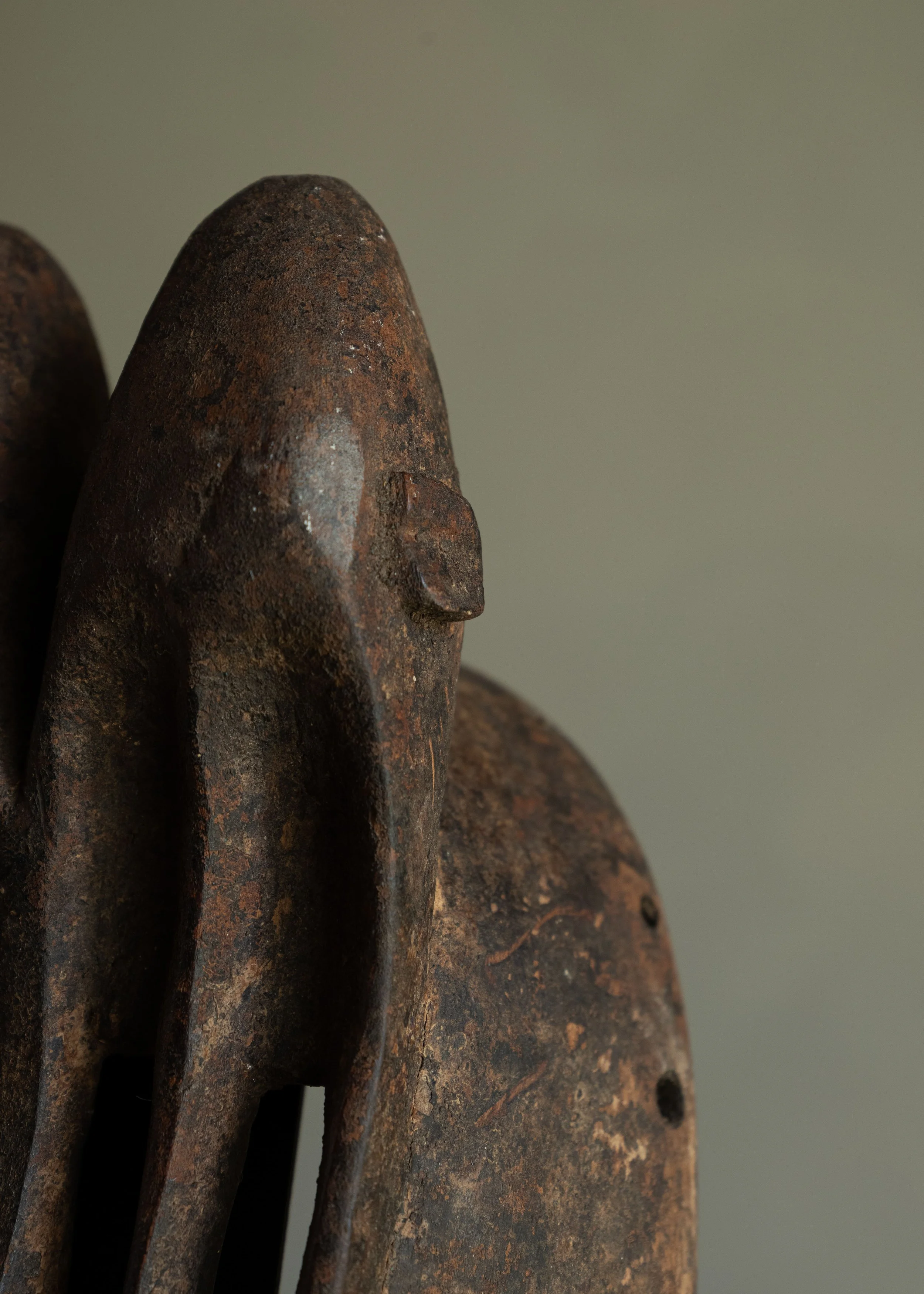
The deep, time-worn patina and evidence of sacrificial application — millet, libations — embedded in the wood surface confirm that this was a living ritual object, not a decorative one. A rare and powerful distillation of the Dogon relationship between earth, rain, and the sacred.
MATERIALS
Wood, pigments
ORIGIN
Dogon peoples, Mali
DIMENSIONS
H 63 cm × W 31.5 cm × D 9 cm (H 24.80″ × W 12.40″ × D 3.54″)
DATE
Early to mid-20th century
LEAD TIME
Available
[CURATED ANTIQUES]
Rising from an oval base, this monumental carving assembles row upon row of human figures, their arms lifted skyward in a single, unified gesture of supplication. The composition moves upward through stacked registers — feet, scarified torsos, faces, arms — culminating in an openwork crest that seems to dissolve into the air above.
The raised-arm posture is among the most charged gestures in Dogon statuary. Scholars, including the Centre Pompidou, have long interpreted it as an act of imploring the divine — most specifically a call for rain, a matter of existential urgency for a farming people wresting crops from the arid soils of the Bandiagara Escarpment. The collective dimension here is striking: rather than a single supplicant, an entire community reaches upward together, their bodies merging into a single vertical force directed at the sky.
The deep, time-worn patina and evidence of sacrificial application — millet, libations — embedded in the wood surface confirm that this was a living ritual object, not a decorative one. A rare and powerful distillation of the Dogon relationship between earth, rain, and the sacred.
MATERIALS
Wood, pigments
ORIGIN
Dogon peoples, Mali
DIMENSIONS
H 63 cm × W 31.5 cm × D 9 cm (H 24.80″ × W 12.40″ × D 3.54″)
DATE
Early to mid-20th century
LEAD TIME
Available