[CURATED ANTIQUES]
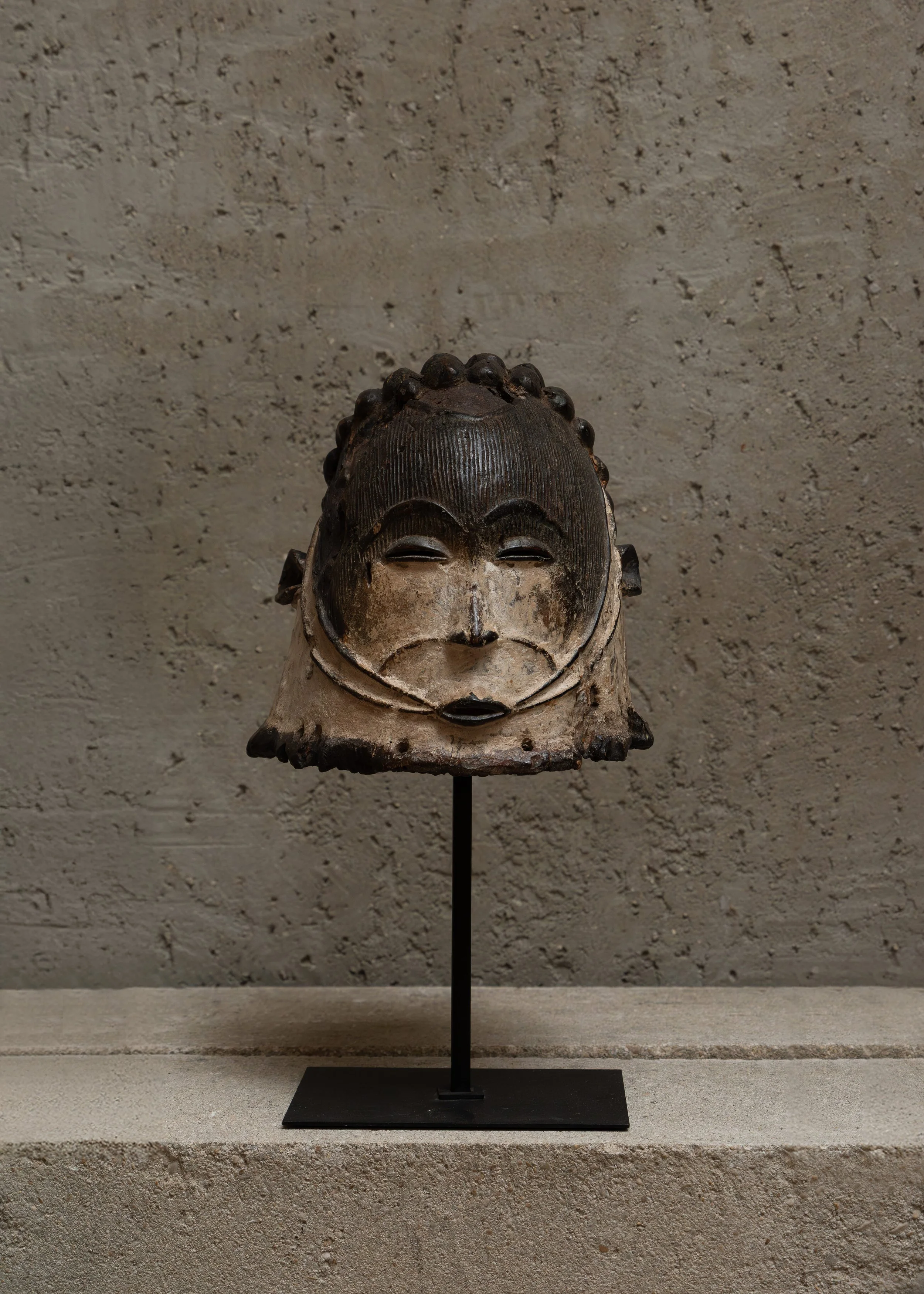
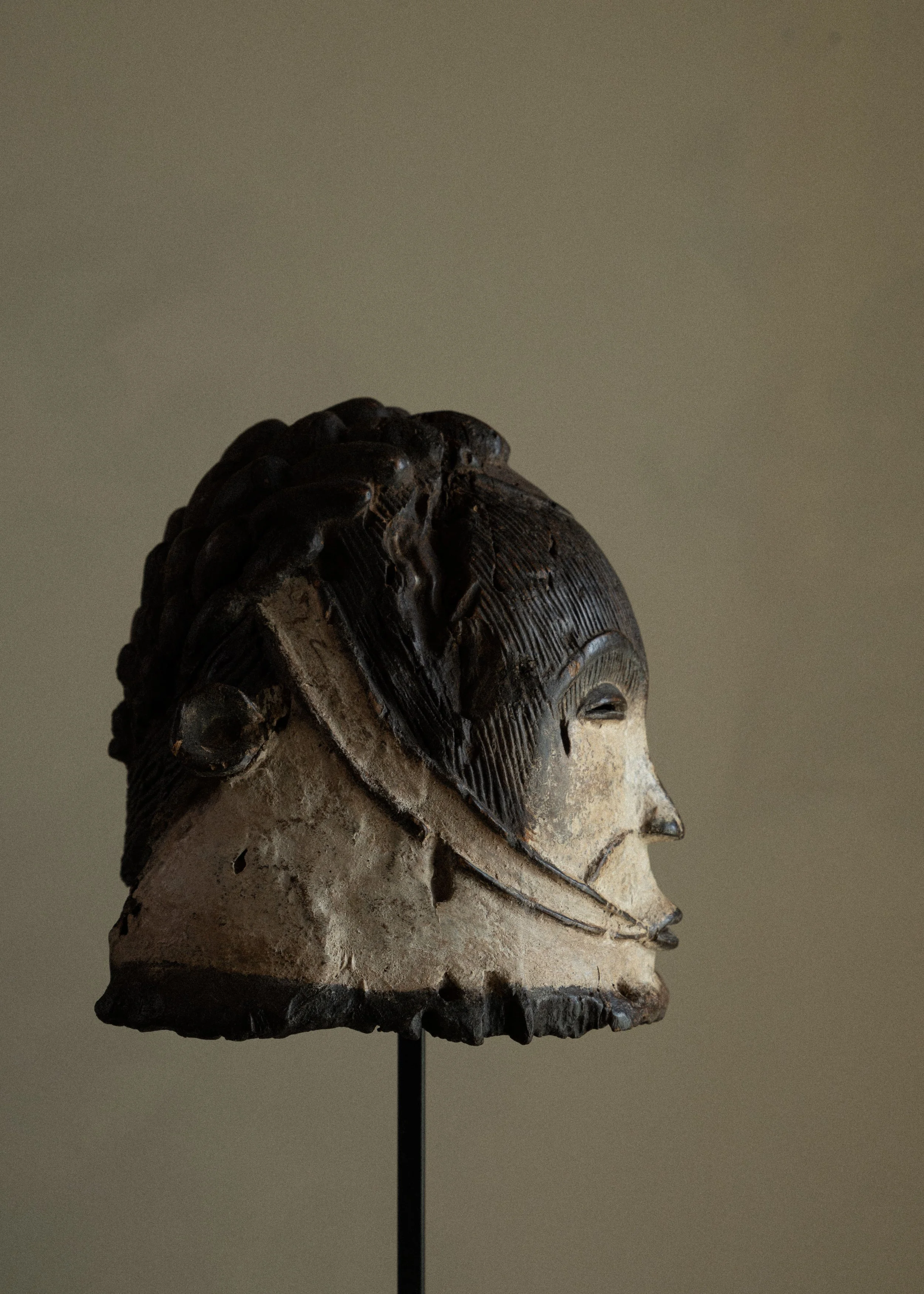
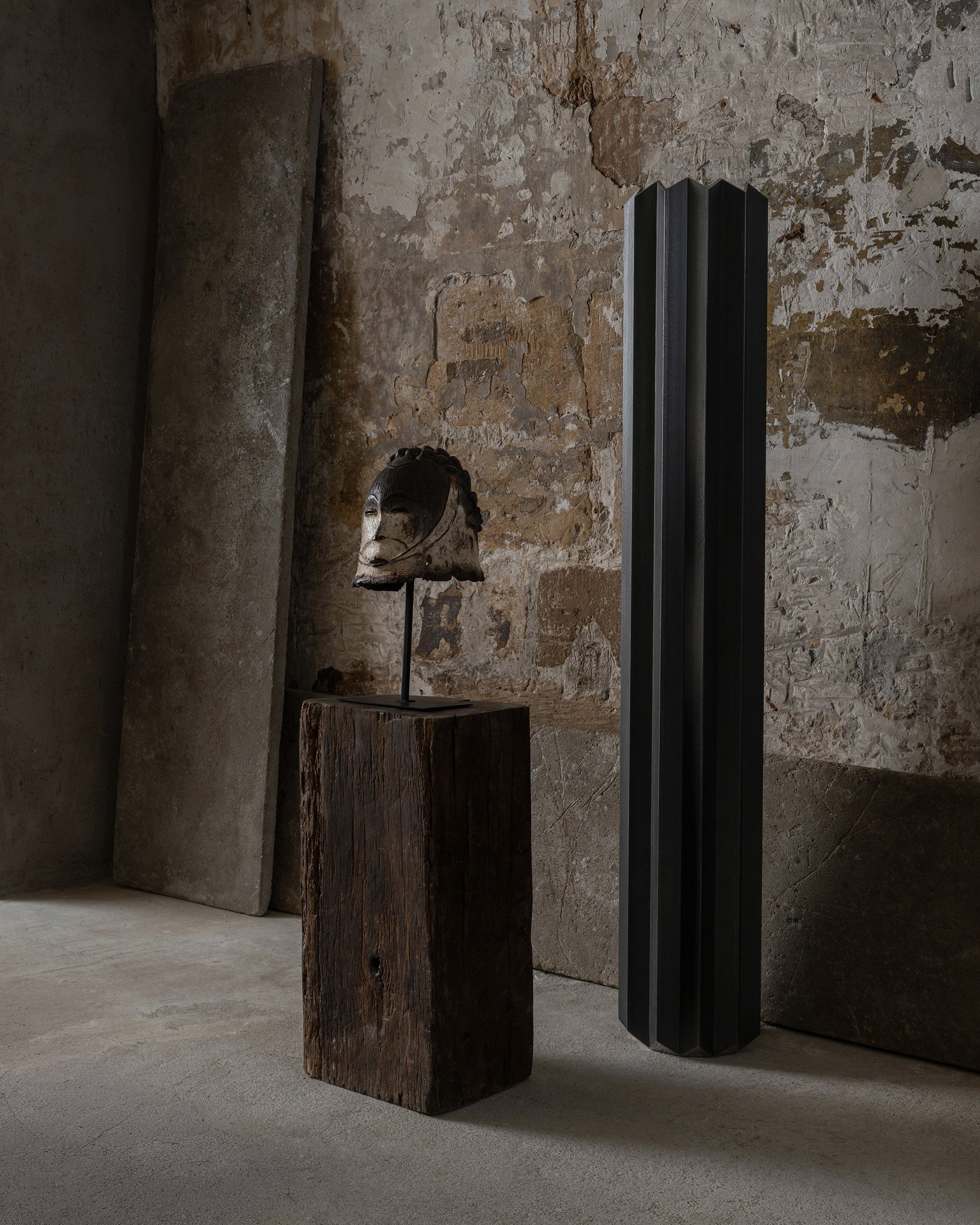
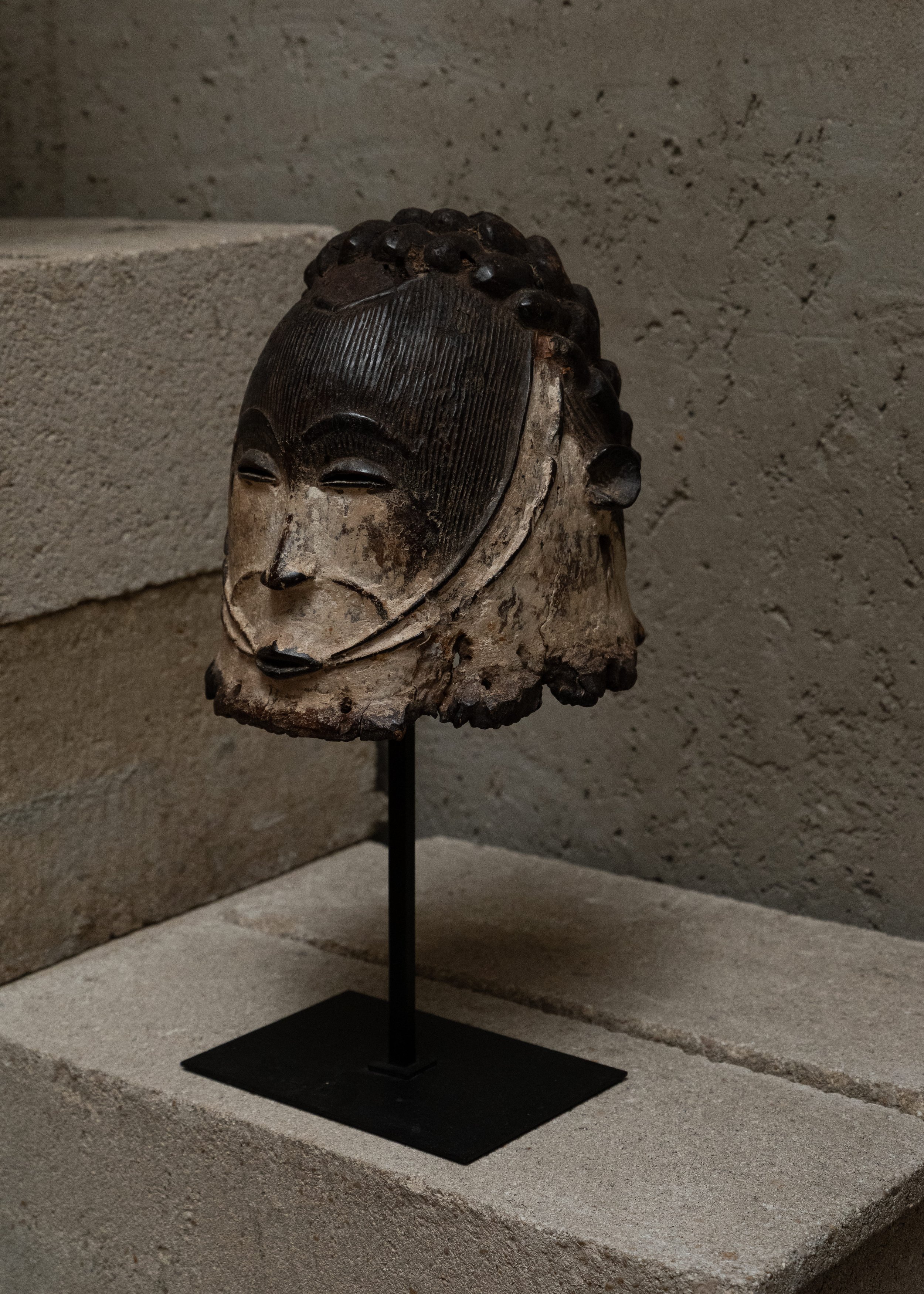
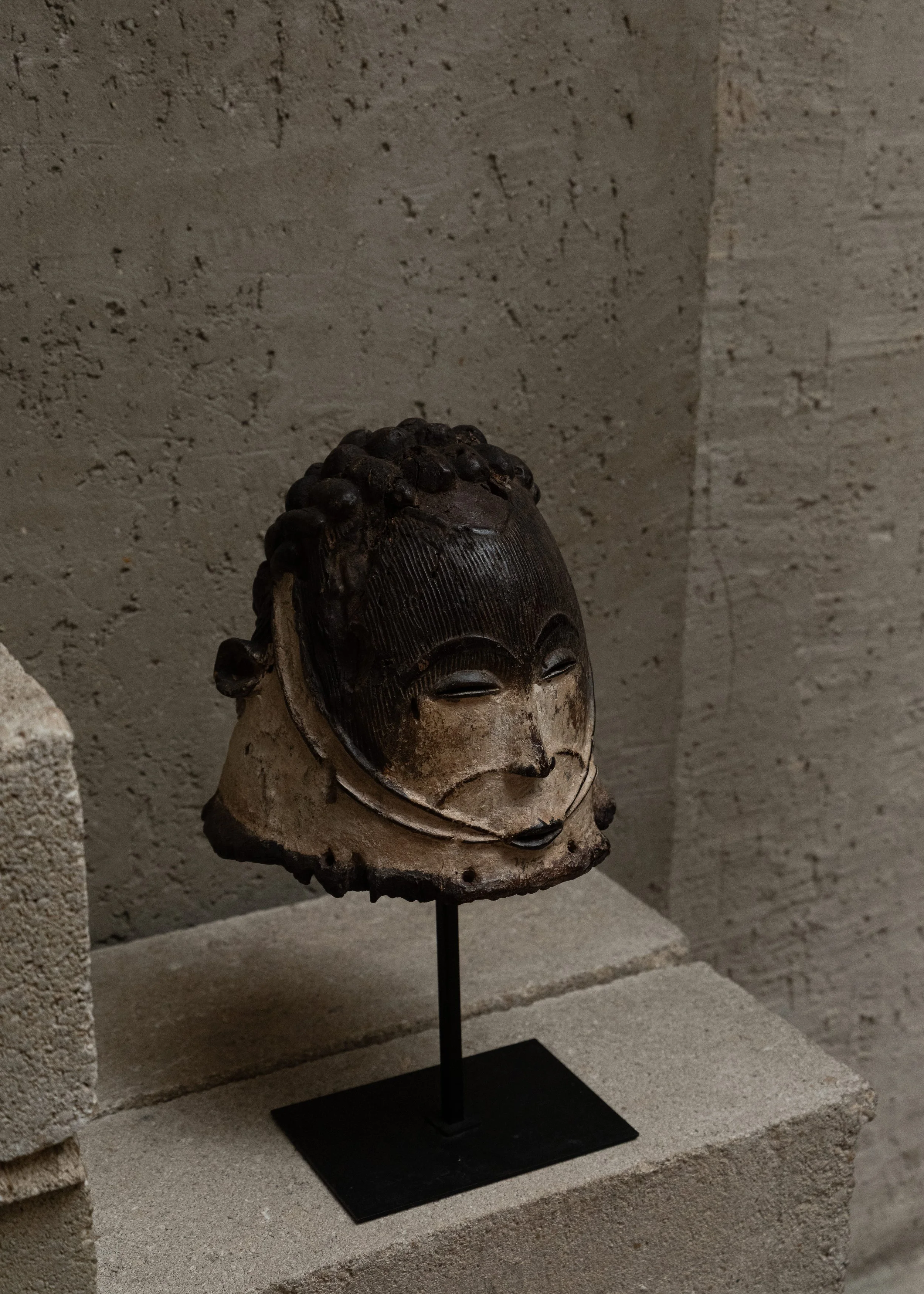
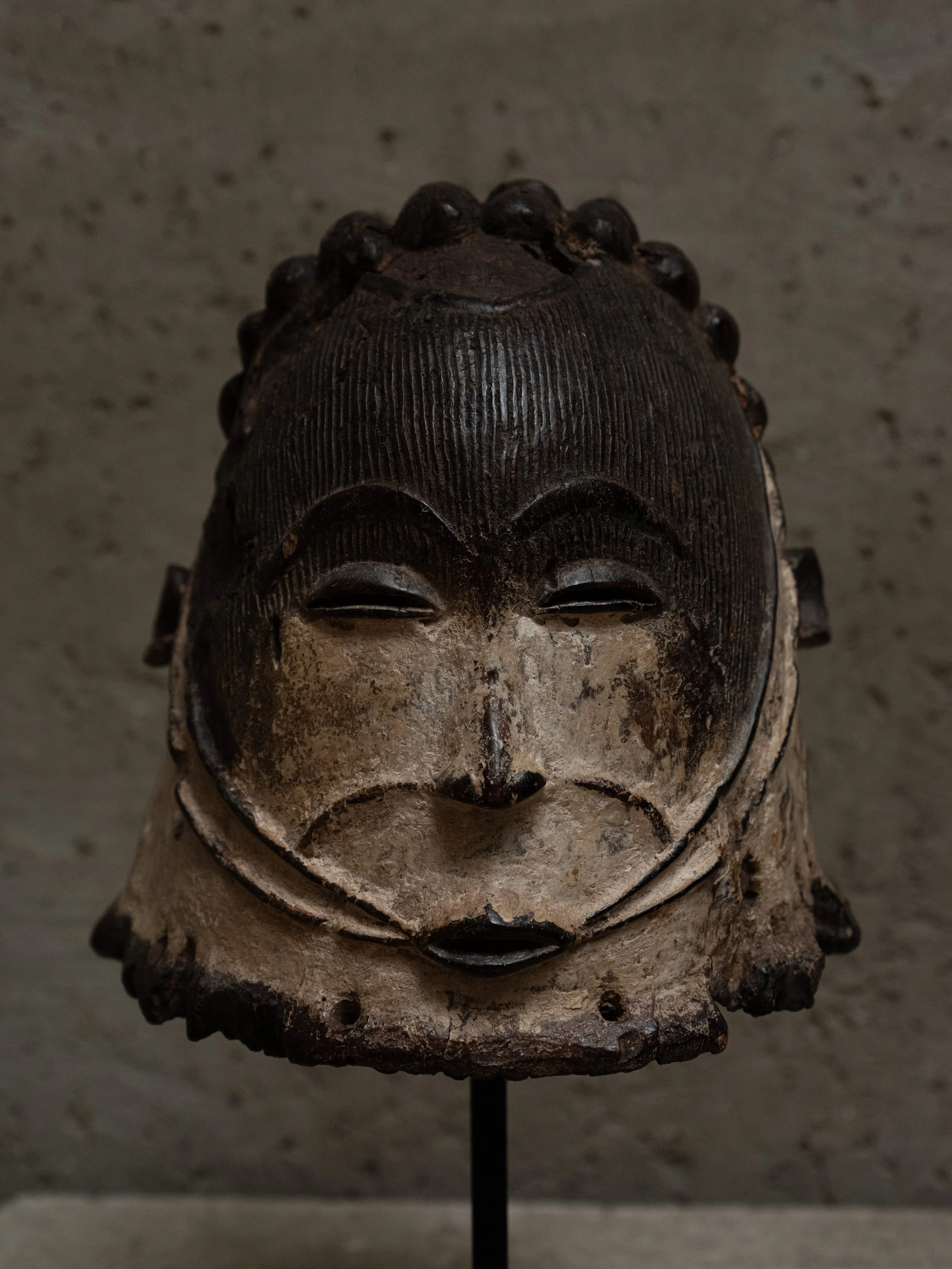
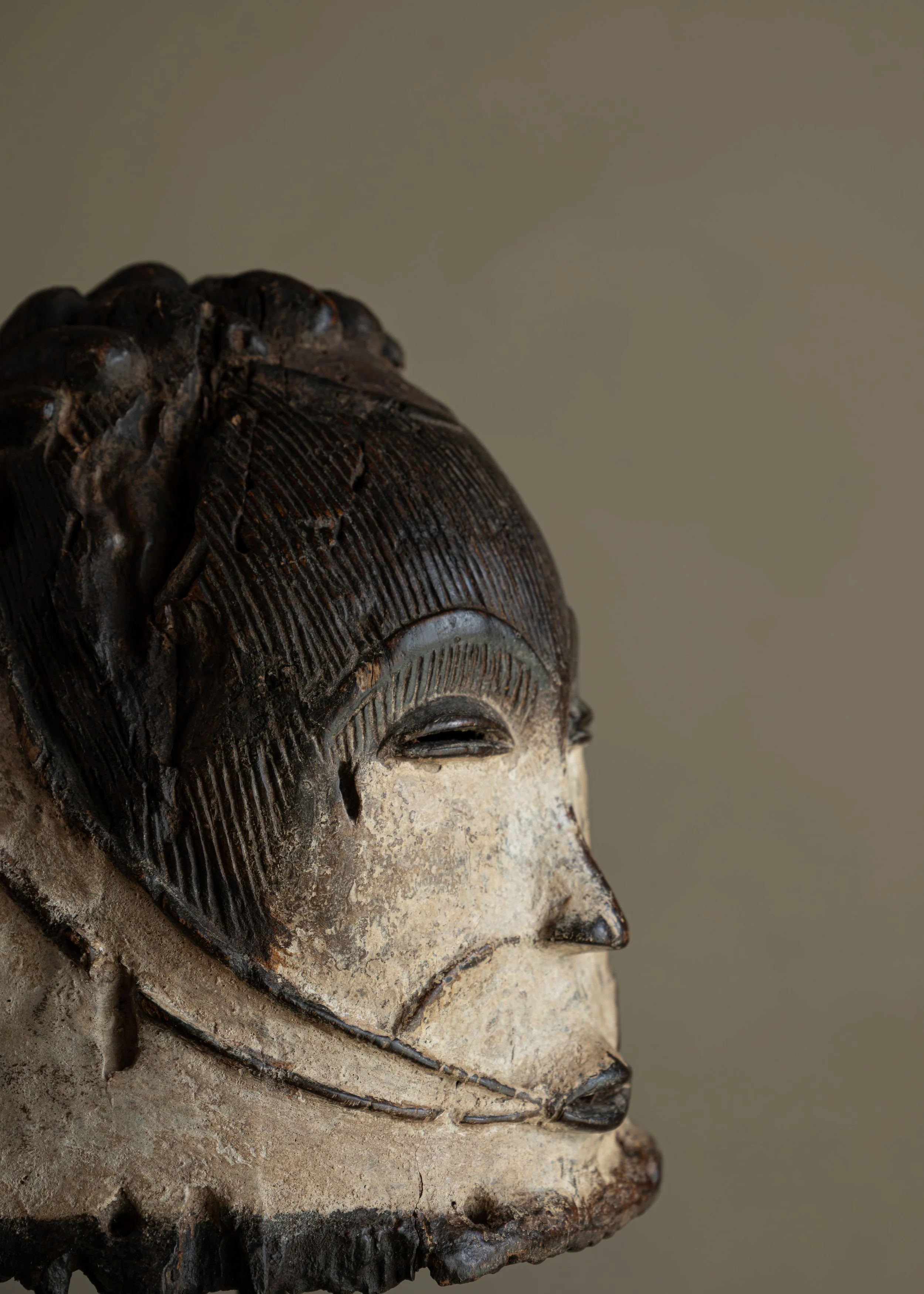
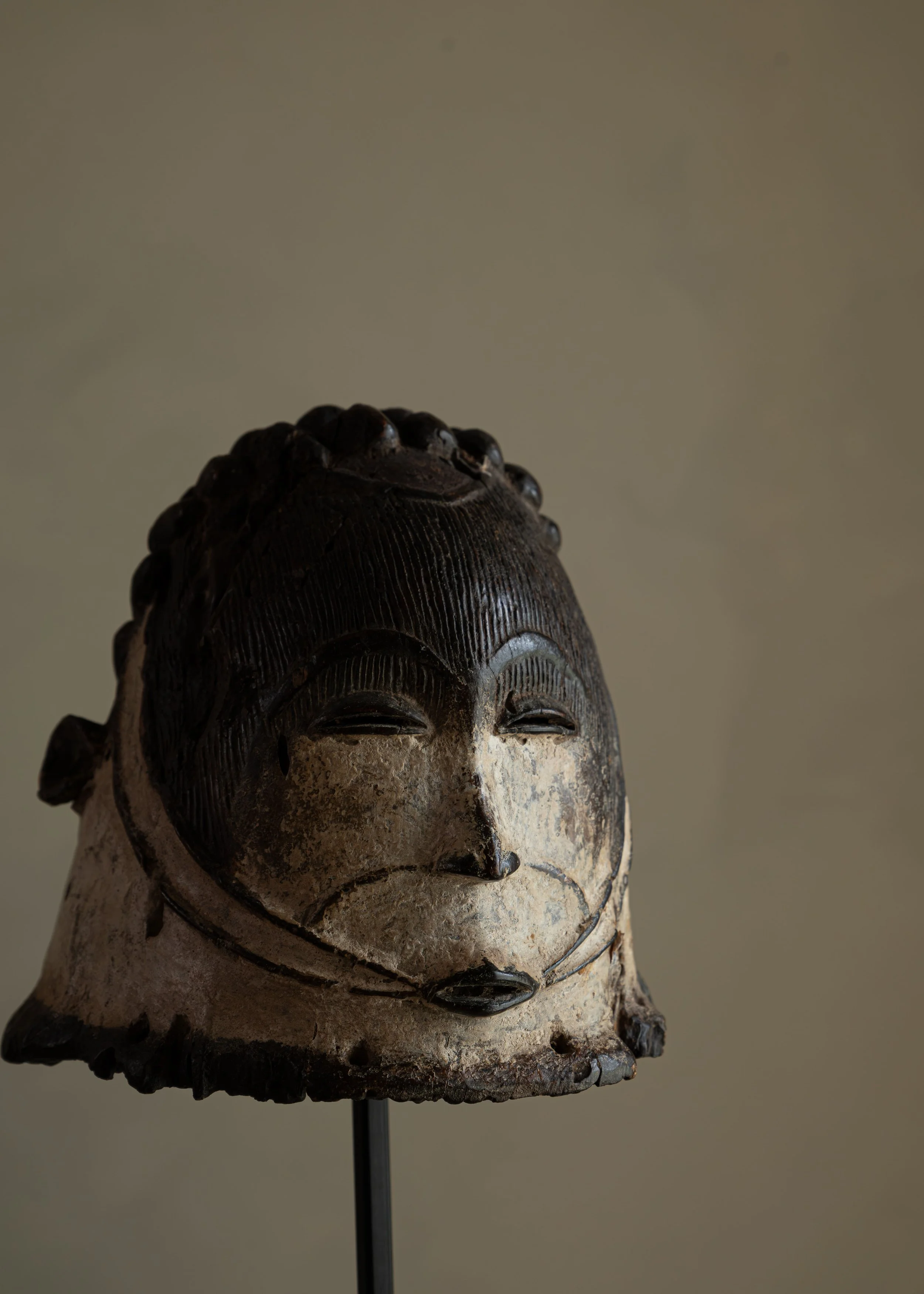
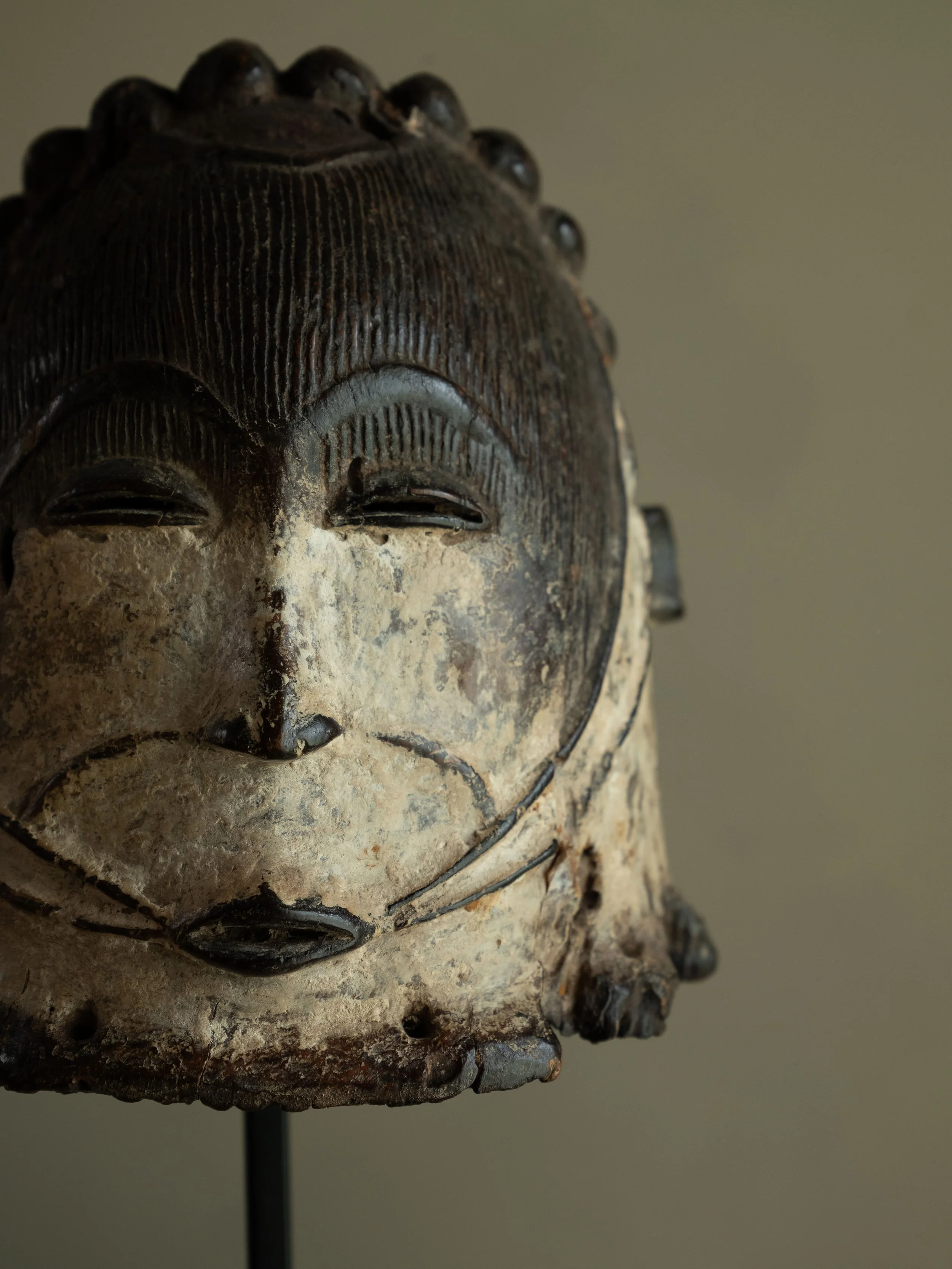
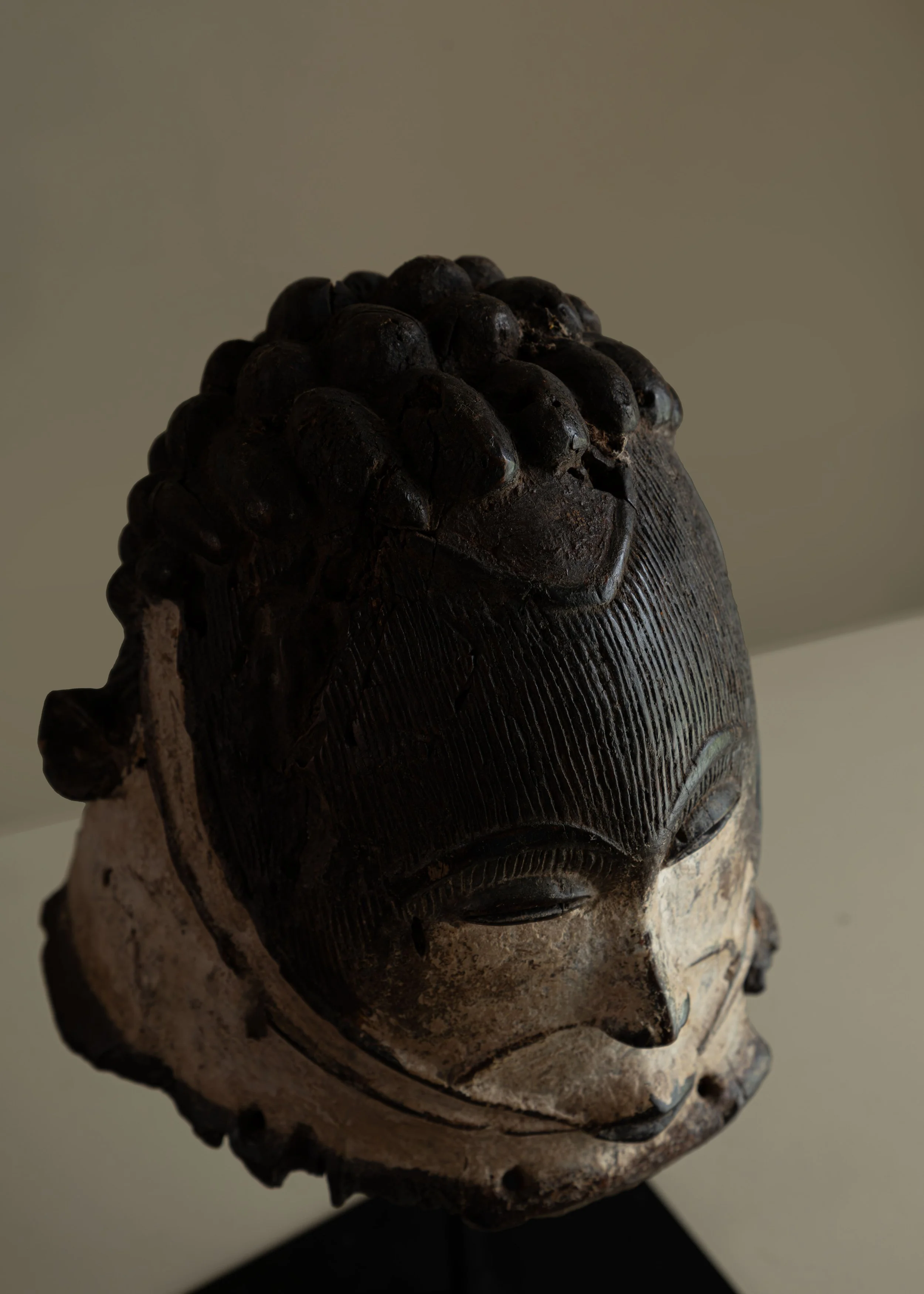
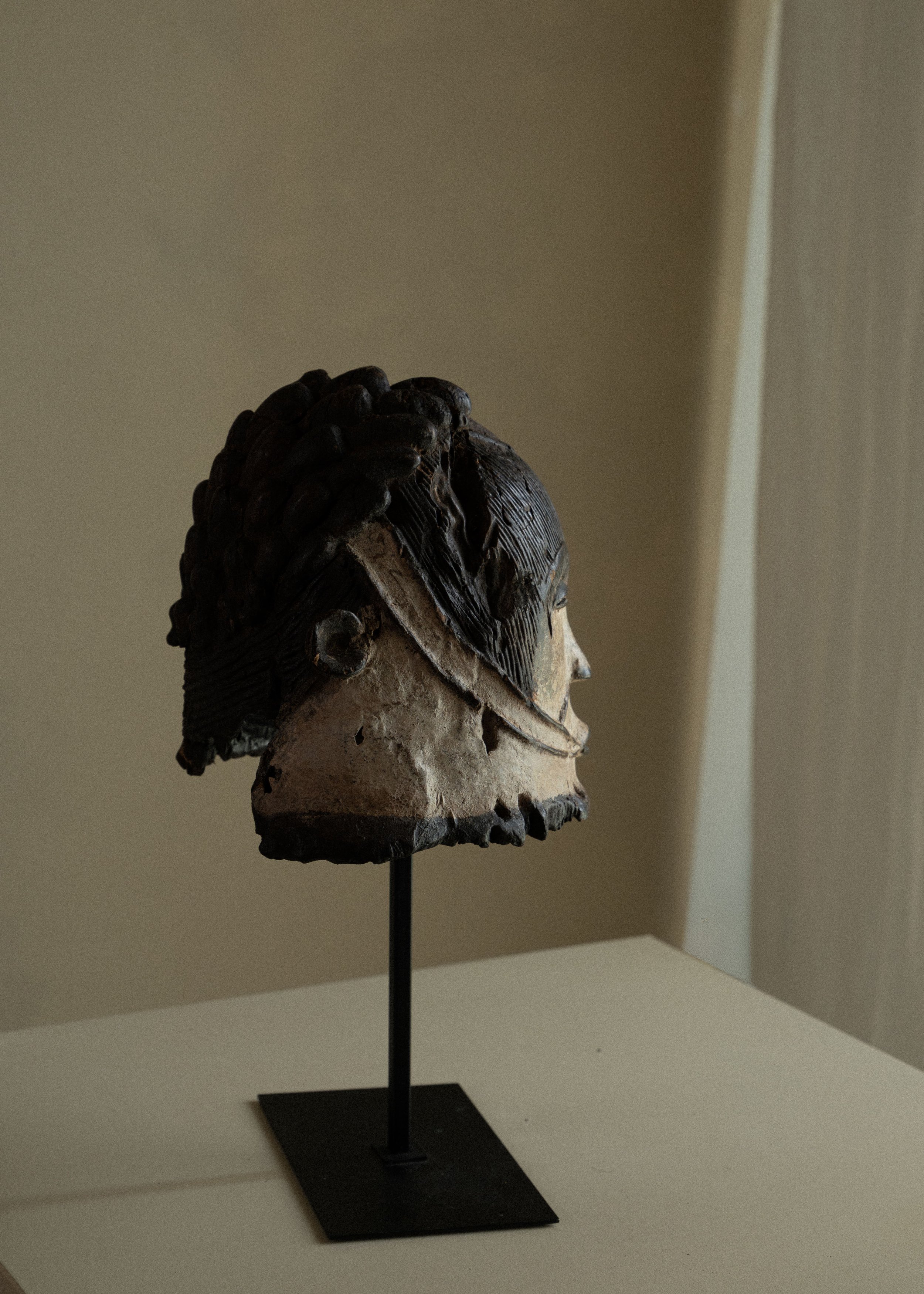
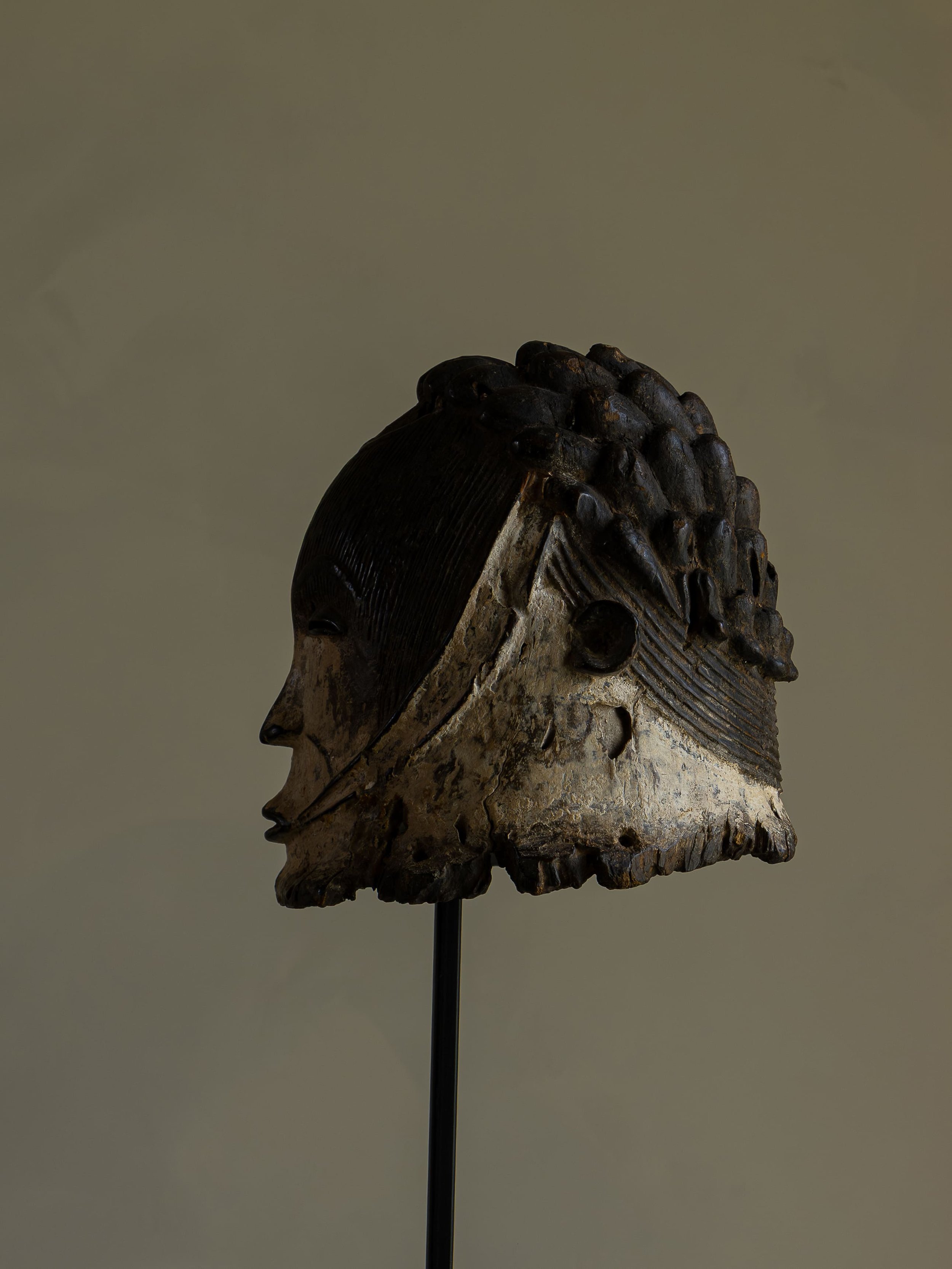
Reduced to its barest essentials, this double monkey mask speaks with the quiet authority of deep abstraction. Two rounded lobes rise in parallel from a broad oval body, the protuberant nostrils or eyes of the baboon rendered with radical economy, separated by three rectangular apertures that pierce the form and animate it with light and shadow. A small secondary zoomorphic head, discreetly carved on the flank, marks this as a composite piece of unusual narrative complexity.
The interior tells its own story: deep parallel scratches from repeated contact with the dancer's head, and a perimeter ring of attachment holes through which the black sanseveria fiber costume would have been sewn, a long collar of dark fibers falling to the knees, with matching bracelets and ankle ornaments. This is not a collected object that escaped ritual use; it is one that was danced, worn, and fully inhabited before passing out of the ceremonial cycle.
The mask belongs to the Dege type, the black baboon, rarest of the three Dogon monkey masks. When initiates of the Awa society no longer wished to use a mask, they would leave it on the ground to slowly deteriorate, eaten by worms and termites. That this example survived intact is itself significant. During the dama funerary masquerade, the Dege dancer held himself apart from the procession, melancholic, marginal, crouching or lying on his side, embodying everything the Dogon community defined itself against.
MATERIAL
Wood
ORIGIN
Dogon peoples, Mali
DIMENSIONS
H 30 cm × W 17 cm × D 12 cm (H 11.81″ × W 6.69″ × D 4.72″)
DATE
Early to mid-20th century
LEAD TIME
Available
[CURATED ANTIQUES]
Reduced to its barest essentials, this double monkey mask speaks with the quiet authority of deep abstraction. Two rounded lobes rise in parallel from a broad oval body, the protuberant nostrils or eyes of the baboon rendered with radical economy, separated by three rectangular apertures that pierce the form and animate it with light and shadow. A small secondary zoomorphic head, discreetly carved on the flank, marks this as a composite piece of unusual narrative complexity.
The interior tells its own story: deep parallel scratches from repeated contact with the dancer's head, and a perimeter ring of attachment holes through which the black sanseveria fiber costume would have been sewn, a long collar of dark fibers falling to the knees, with matching bracelets and ankle ornaments. This is not a collected object that escaped ritual use; it is one that was danced, worn, and fully inhabited before passing out of the ceremonial cycle.
The mask belongs to the Dege type, the black baboon, rarest of the three Dogon monkey masks. When initiates of the Awa society no longer wished to use a mask, they would leave it on the ground to slowly deteriorate, eaten by worms and termites. That this example survived intact is itself significant. During the dama funerary masquerade, the Dege dancer held himself apart from the procession, melancholic, marginal, crouching or lying on his side, embodying everything the Dogon community defined itself against.
MATERIAL
Wood
ORIGIN
Dogon peoples, Mali
DIMENSIONS
H 30 cm × W 17 cm × D 12 cm (H 11.81″ × W 6.69″ × D 4.72″)
DATE
Early to mid-20th century
LEAD TIME
Available

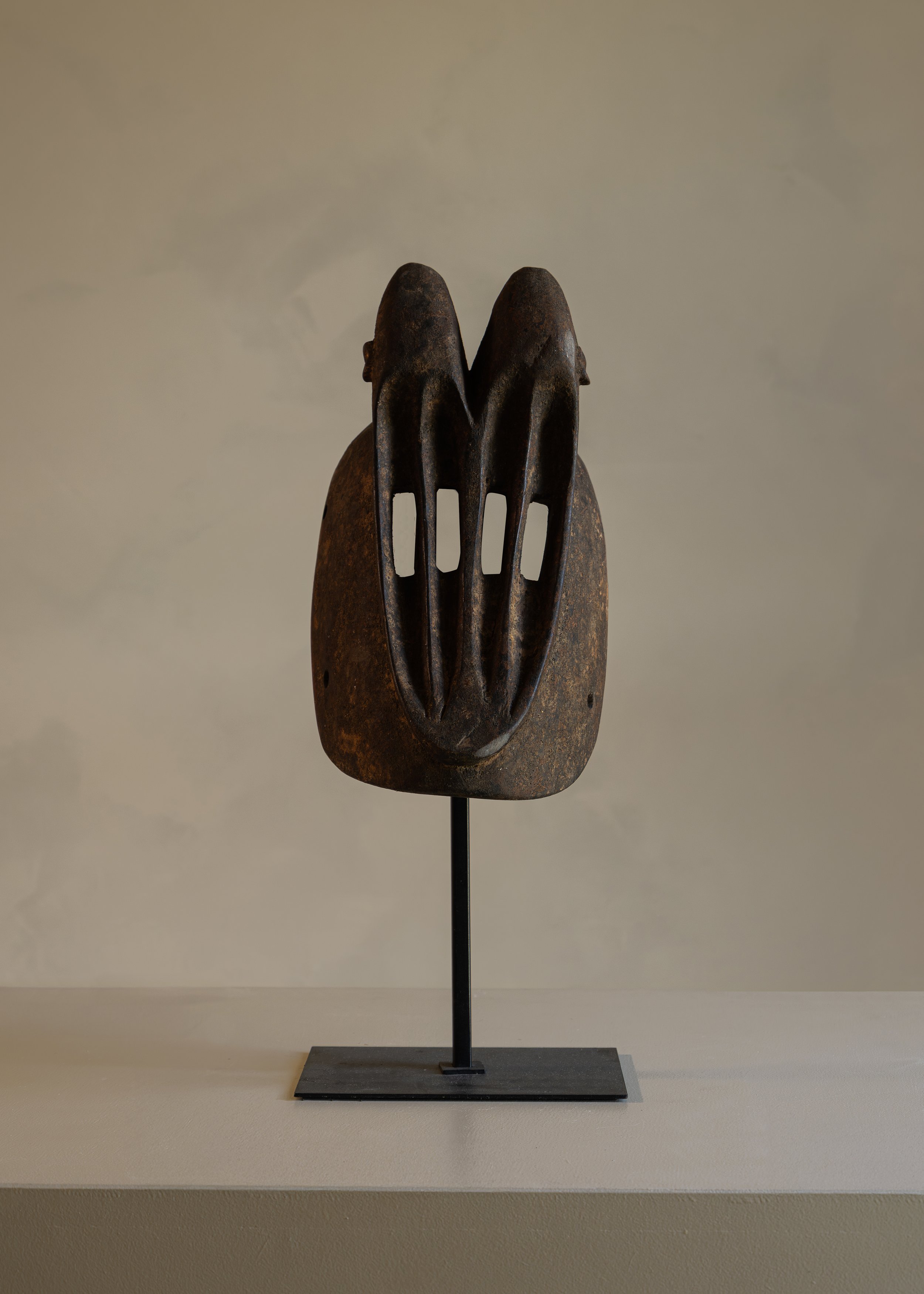 Image 1 of 7
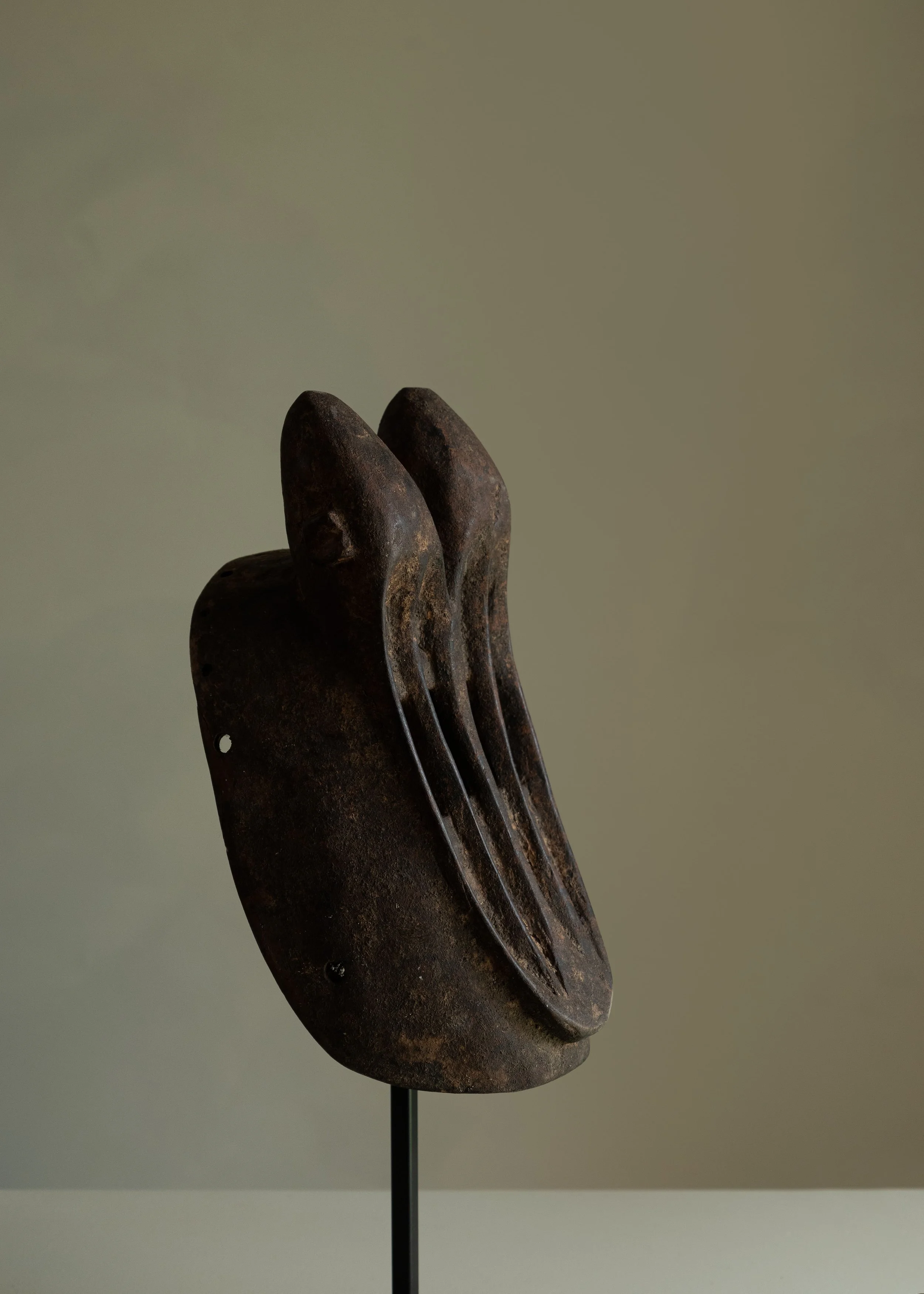 Image 2 of 7
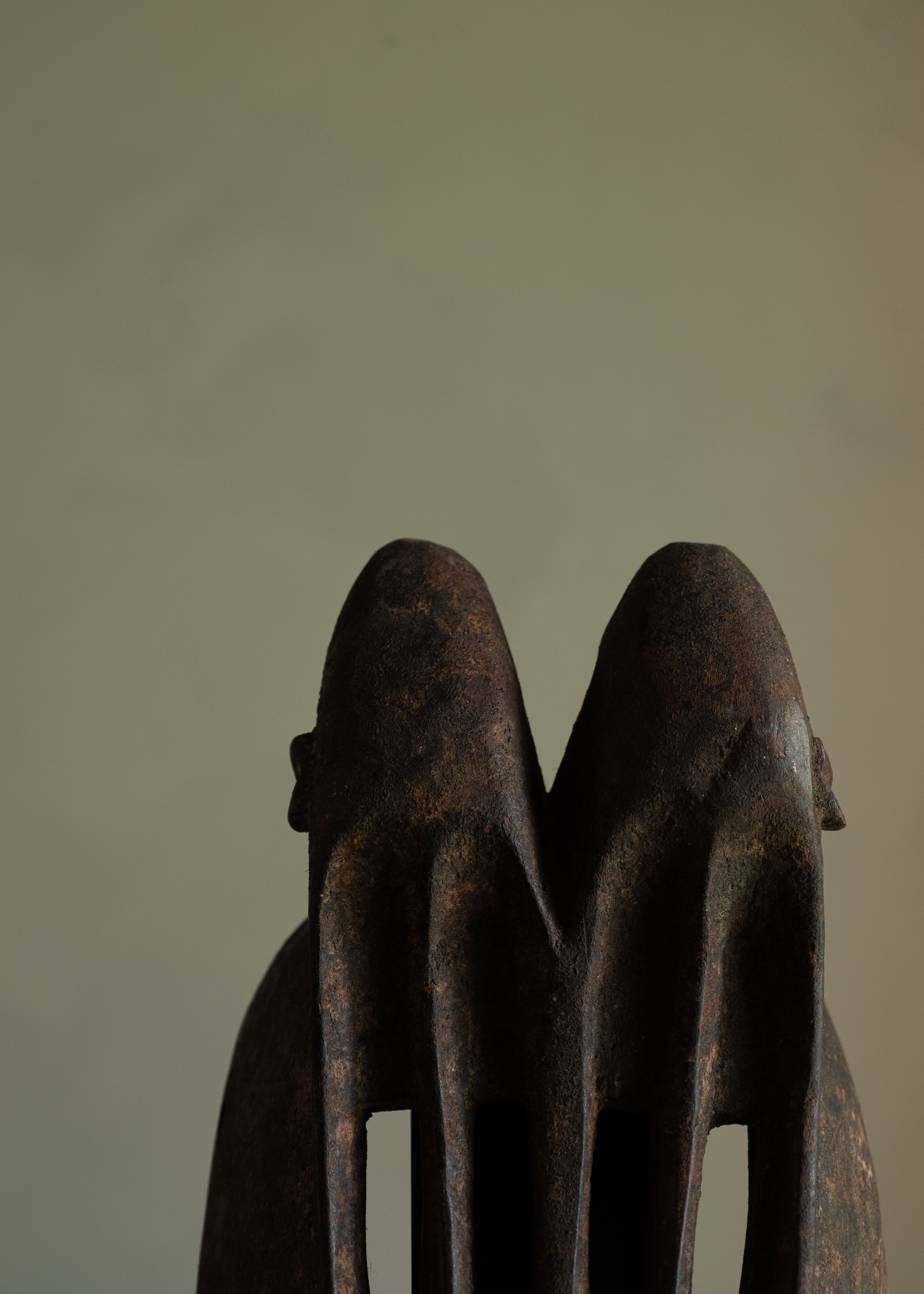 Image 3 of 7
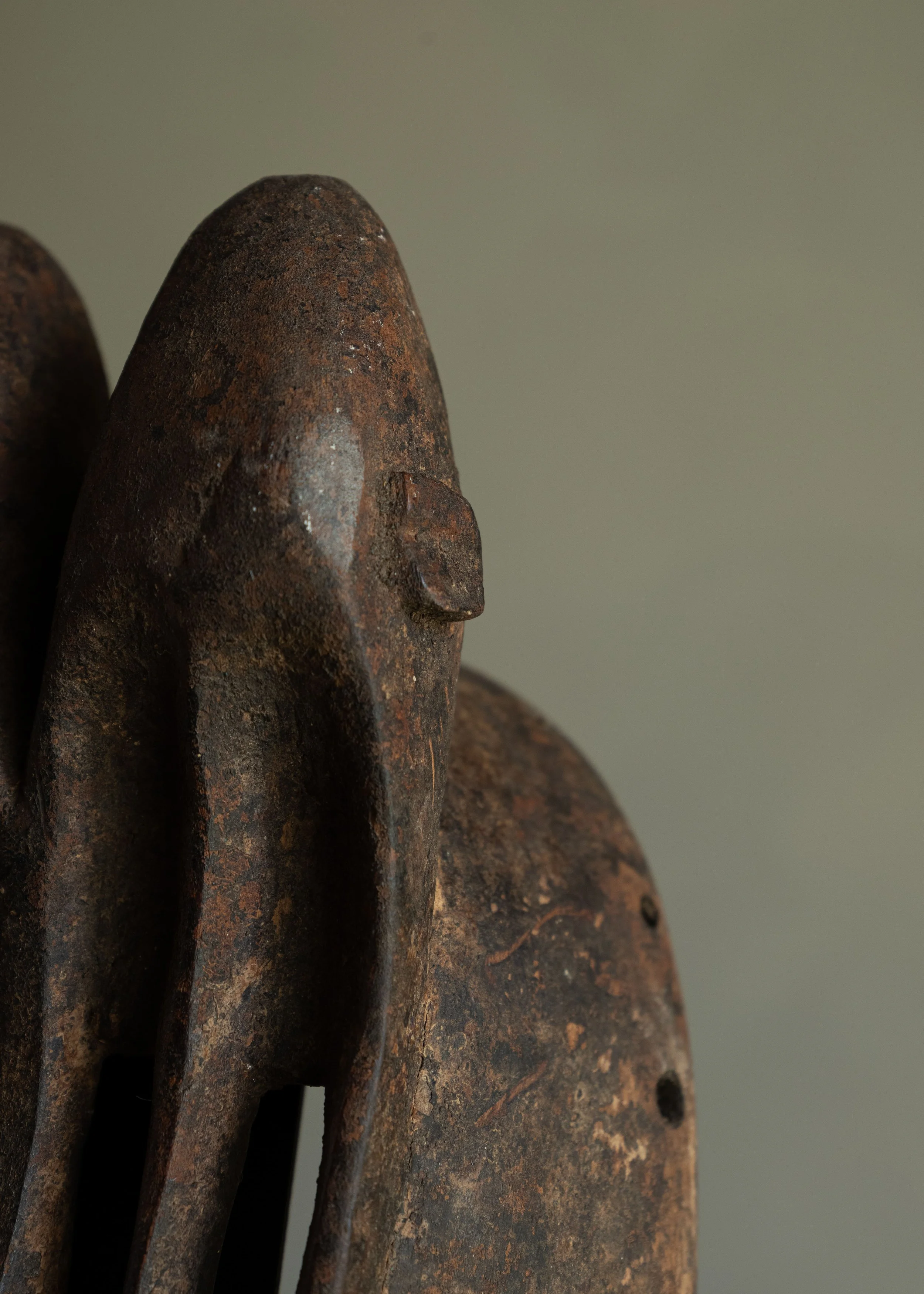 Image 4 of 7
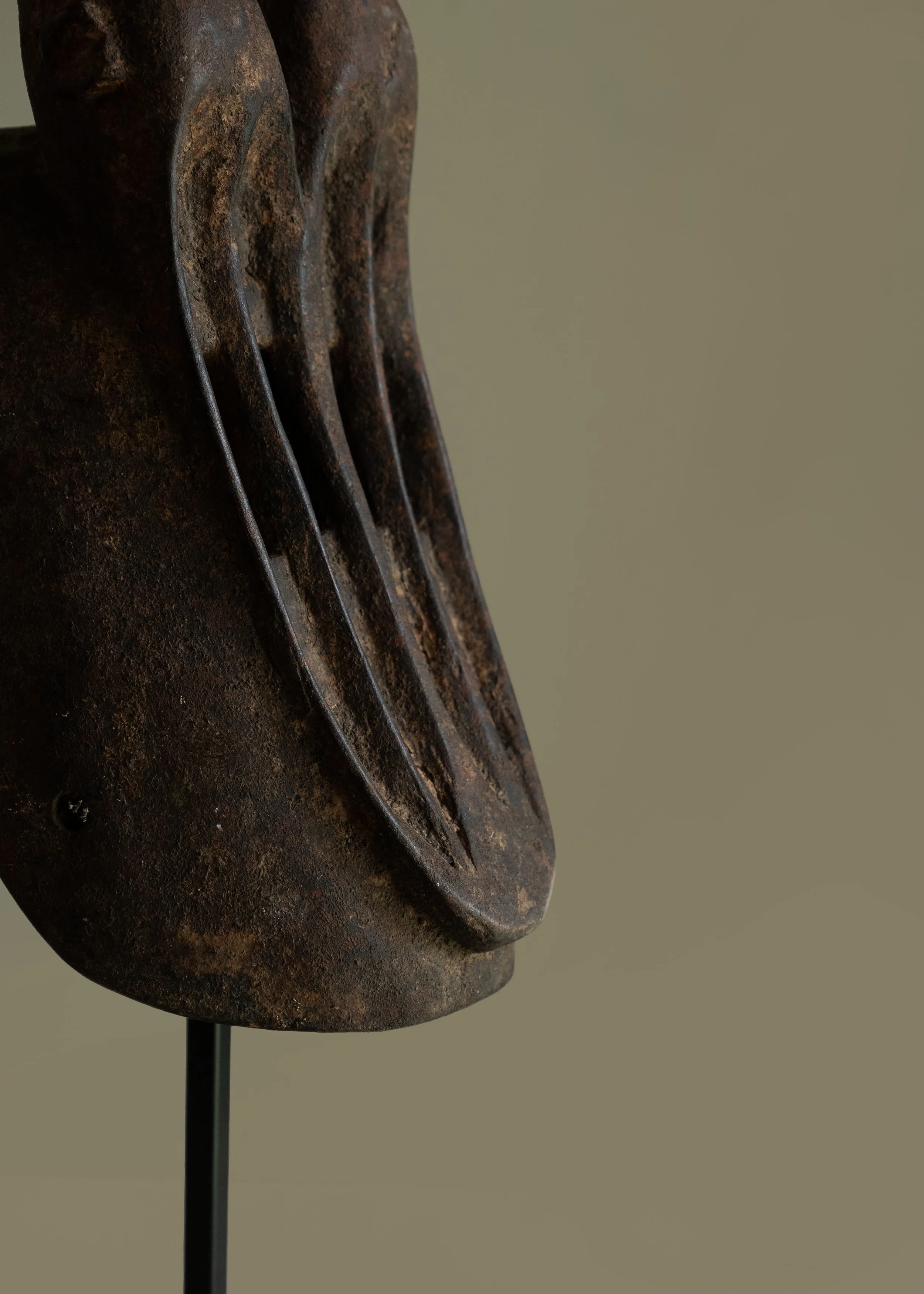 Image 5 of 7
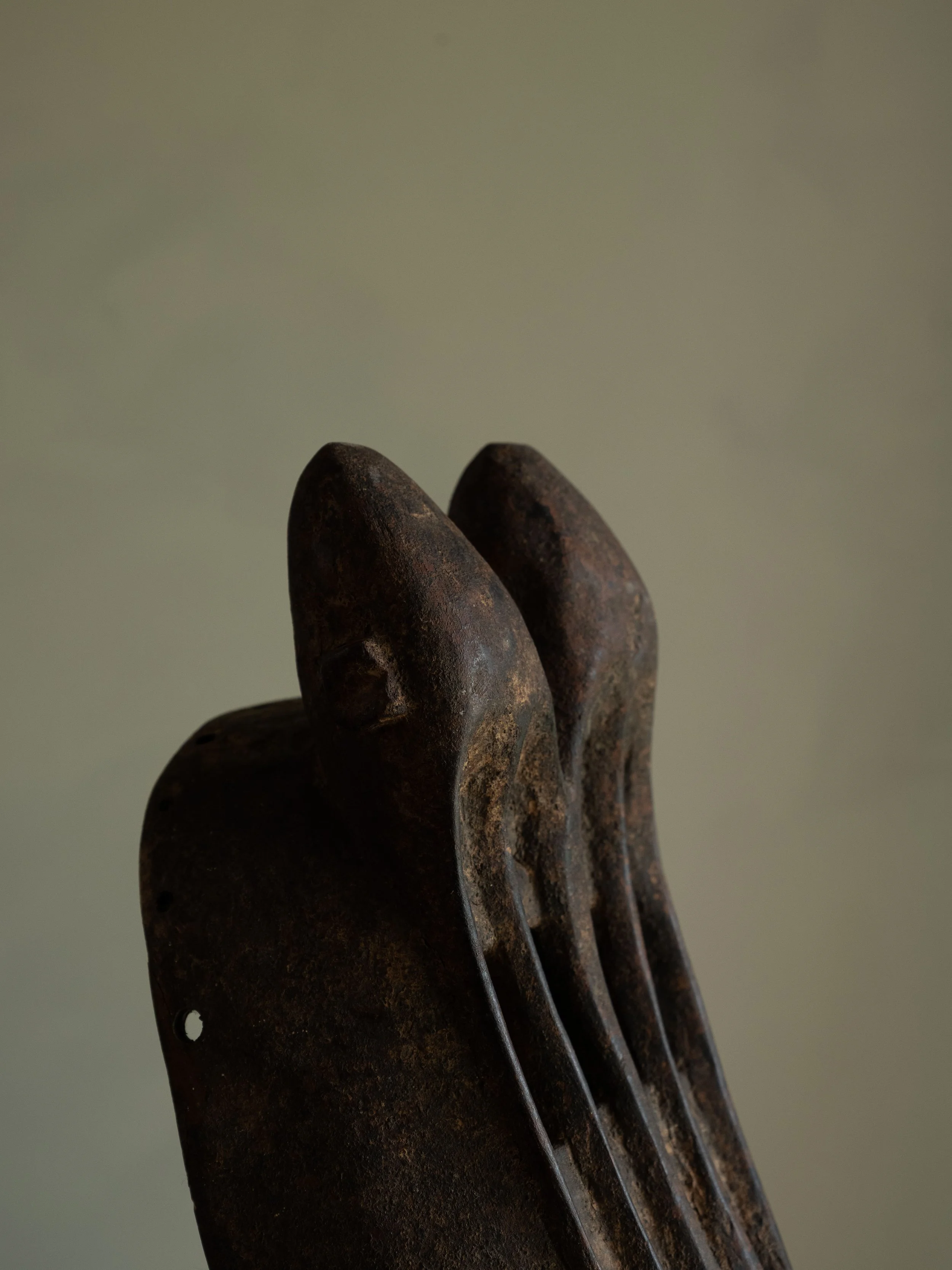 Image 6 of 7
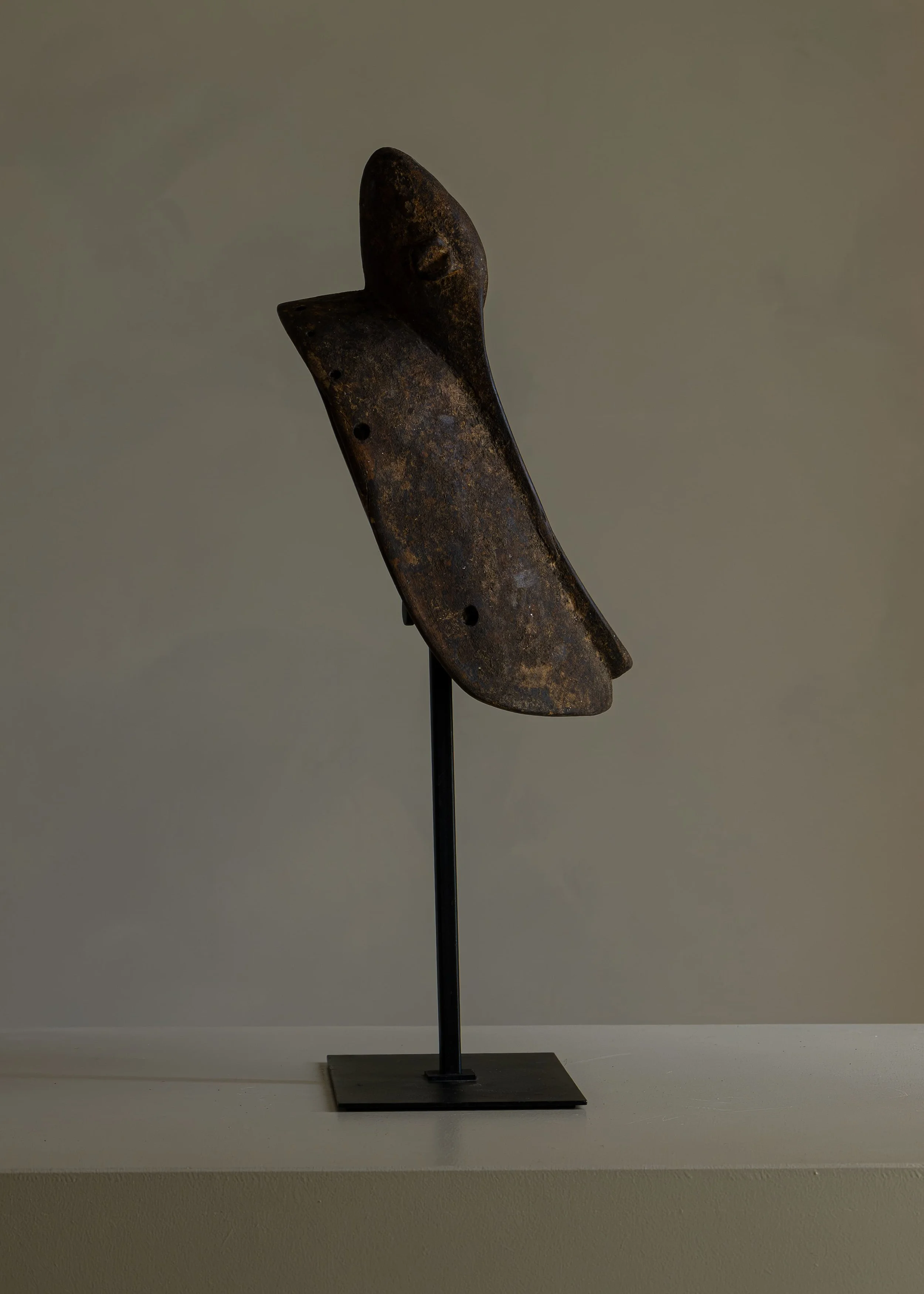 Image 7 of 7